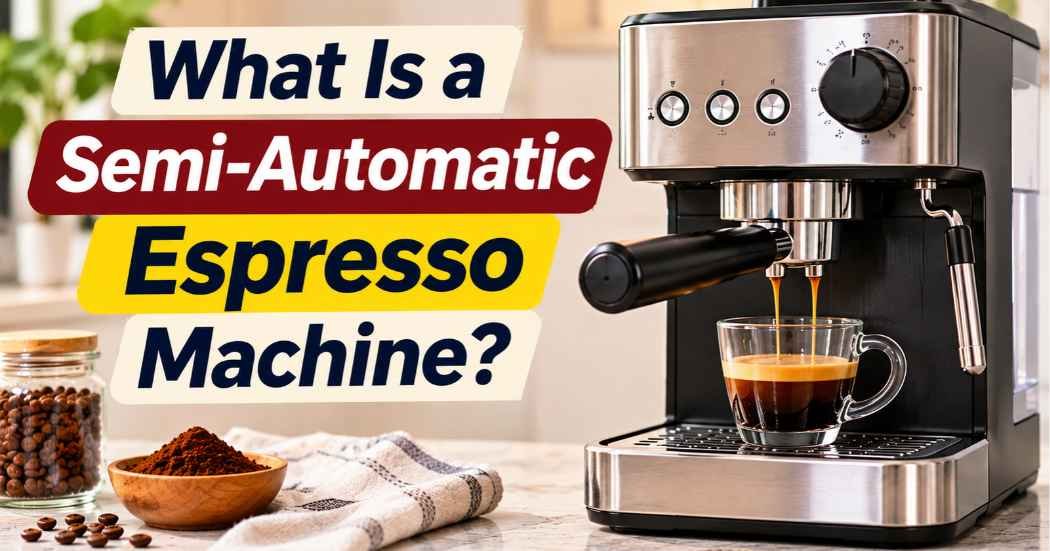
Quick answer: What is a semi-automatic espresso machine? It is a machine that heats the water and pushes it through the coffee with a pump. You do the rest by hand. You grind, measure, tamp and start the shot. In most cases you also steam the milk yourself.
This gives you control without the hard work of a fully manual lever machine. Below you will find how it works, a comparison chart, the parts you will see, pros and cons, what you can and cannot do, and a full FAQ.
The word “semi” can sound confusing. Half of what? Half of the job is done by the machine and half is done by you. That balance is why this type is so popular at home. It is simple enough for a beginner and deep enough for a coffee fan.
This guide uses short, plain steps. By the end you will know if this type fits your kitchen and your habits.
What Is a Semi-Automatic Espresso Machine?
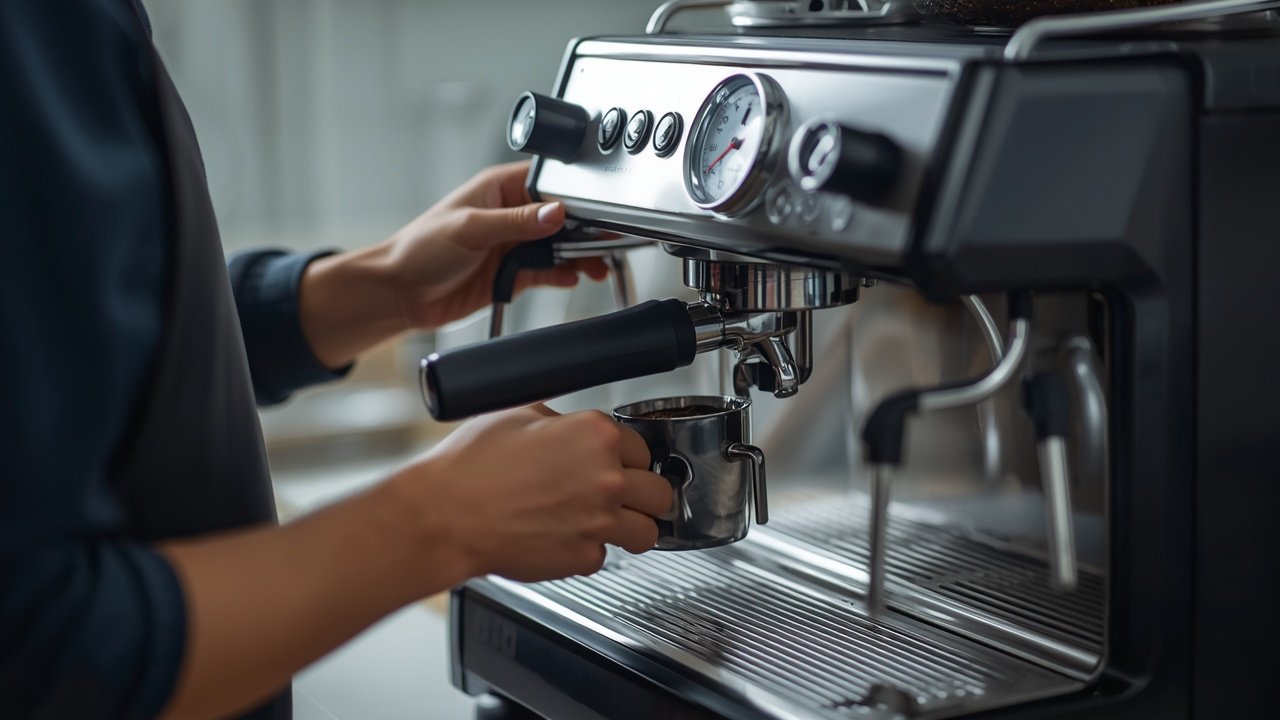
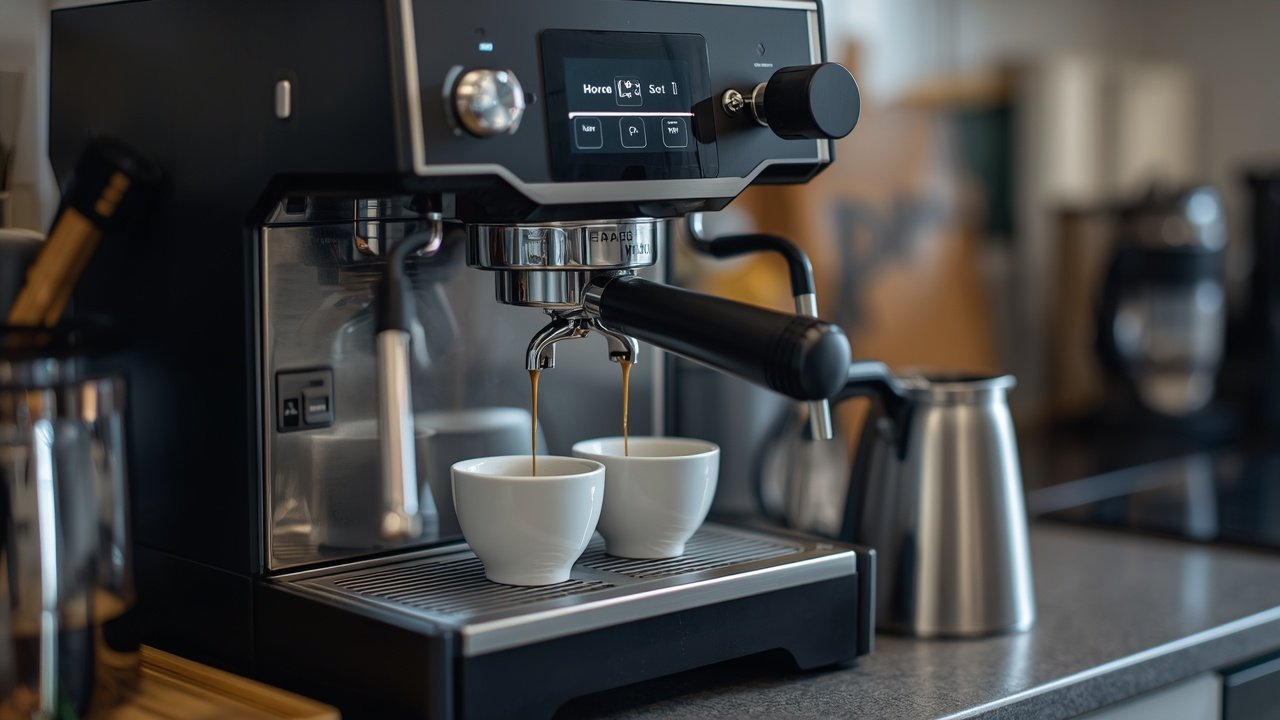
A semi-automatic machine uses an electric pump to push hot water through finely ground coffee. The pump gives the pressure that real espresso needs. The machine controls water heat and flow. You control everything before and after that.
Breville describes this type as one where you handle grinding, tamping and prep while an electric pump controls water flow, pressure and timing. Many models let you use a preset shot size or set the volume by hand.
If you see the phrase what is a semi automatic espresso machine written without the hyphen, it means the same thing. Both spellings are common.
How a Semi-Automatic Espresso Machine Works
Here is a normal shot from start to finish. Each step is short.
- Fill the water tank and switch the machine on. Let it warm up fully.
- Grind fresh coffee fine, close to the texture of table salt.
- Fill the portafilter basket with a measured dose and level it.
- Tamp with firm, even pressure.
- Lock the portafilter into the group head and place a cup under it.
- Press the shot button. The pump pushes hot water through the puck.
- Stop the shot when you reach your time or weight. Some machines stop on their own at a preset volume.
- Steam milk with the wand if you want a latte or cappuccino.
- Knock out the used coffee and rinse the portafilter.
Who Does What?
| Task | The machine | You |
|---|---|---|
| Heat the water | Yes | No |
| Make pressure with the pump | Yes | No |
| Grind the beans | Only if it has a built in grinder | Yes, if it does not |
| Measure and tamp | No | Yes |
| Start the shot | No | Yes |
| Stop the shot | On some models | On most models |
| Steam the milk | Gives the steam | You guide the wand |
Semi-Automatic vs Manual vs Automatic vs Super-Automatic
Machine names can blur together. This chart makes the gap clear.
| Type | How it works | Your effort | Best for |
|---|---|---|---|
| Manual (lever) | You pull a lever to push the water | Highest | Hands-on fans |
| Semi-automatic | Pump makes pressure, you control prep and timing | Medium | Learners and tinkerers |
| Automatic | Machine stops the shot for you, often by volume or weight | Lower | Steady shots with less watching |
| Super-automatic | Grinds, doses, tamps and brews from a button | Lowest | Speed and convenience |
KitchenAid notes that the biggest gap between full automatic and semi-automatic is often control versus convenience. If you love routine and fast mornings, a super-automatic may fit. If you enjoy the craft, a semi-automatic is a better match.
Parts of a Semi-Automatic Espresso Machine
| Part | What it does |
|---|---|
| Water tank | Holds the water for brewing and steam |
| Pump | Creates the pressure that pushes water through the coffee |
| Boiler or heating block | Heats the water |
| Group head | The part where the portafilter locks in |
| Portafilter and basket | Holds the ground coffee |
| Steam wand | Heats and froths milk |
| Pressure gauge, on some models | Shows pump pressure while you brew |
| Drip tray | Catches spills and extra water |
A Simple Starting Recipe
A common starting point is 18 grams of coffee in the basket and about 36 grams of espresso in the cup. Aim for roughly 25 to 30 seconds. That is a one to two ratio. It is a guide, not a law. Taste the shot and adjust the grind first.
| What you taste | What it usually means | What to change |
|---|---|---|
| Sour and thin | Water ran too fast | Grind finer |
| Bitter and dry | Water ran too slow | Grind coarser |
| Weak and watery | Dose too low or yield too high | Add coffee or stop earlier |
| Balanced and sweet | Good extraction | Keep the recipe |
For a longer walk through dose, grind and time, read how to calibrate an espresso machine. Fresh, fine coffee also helps, so see the best ground coffee for espresso machine tips. For milk drinks, check what milk is best for espresso machine steaming.
Pros and Cons of a Semi-Automatic Espresso Machine
| ✔ Pros | ✘ Cons |
|---|---|
| You control dose, grind and shot time | Takes practice to get shots right |
| Shots can taste better than push button machines | Takes more time each morning |
| Easier to learn than a lever machine | You need a good grinder |
| Manual steam wand makes real milk texture | Steaming milk is a skill to learn |
| Many models and budgets to choose from | More cleaning steps than a pod machine |
What You Can and Cannot Do
| You can | You cannot |
|---|---|
| Change grind, dose and shot time | Walk away while a shot brews, on most models |
| Make espresso, lattes, cappuccinos and Americanos | Expect cafe results on day one |
| Use any fresh coffee you like | Skip the grinder, unless the machine has one built in |
| Learn skills that carry to better machines | Get a hands-free, bean to cup drink from one button |
Who Should Buy One, and Who Should Skip
- Buy one if you like to learn and enjoy a morning routine.
- Buy one if you want better control than a pod or push button machine gives.
- Buy one if you want to make milk drinks with a real steam wand.
- Skip it if you want a drink in under a minute with no steps.
- Skip it if you do not want to clean a portafilter and wand each day.
Many better semi-automatic models also add a temperature controller. Learn about that feature in what is a PID espresso machine.
Care Tips to Keep It Working
| How often | What to do |
|---|---|
| After each shot | Knock out the puck and rinse the portafilter |
| After steaming | Wipe the wand and purge it briefly |
| Every day | Empty the drip tray and refill the tank with fresh water |
| Every week | Soak the basket and portafilter in espresso cleaner |
| On schedule | Descale as your manual says |
Good water protects the heater and pump. Our guide on the best water for espresso machine use explains what to pour in. If something stops working, try why is my espresso machine not working. For another look at machine types, see Wikipedia’s espresso machine page.
Semi-Automatic Espresso Machine FAQs
What is a semi-automatic espresso machine in simple words?
It is a machine that heats water and makes pressure for you. You do the grinding, tamping and shot starting. That is why it is called semi, or half, automatic.
What is the difference between semi-automatic and automatic?
On a semi-automatic you control the shot time or volume. An automatic machine usually stops the shot for you at a set amount. Both need you to grind and tamp.
Is a semi-automatic espresso machine good for beginners?
Yes, if you are willing to learn. The first weeks need patience. Many people find it more fun than a push button machine because they can see their skills improve.
Do I need a separate grinder?
Most semi-automatic machines do not grind. You need a separate burr grinder that can make a fine, even grind. Some models have a grinder built in.
Can I make lattes on a semi-automatic machine?
Yes. Most models have a steam wand. You pull the shot, then steam milk by hand and pour it over the espresso.
How long does a shot take?
A common target is 25 to 30 seconds once the water flows. Your grind, dose and roast can change that, so taste and adjust.
Is a semi-automatic better than a super-automatic?
It depends on what you value. A semi-automatic gives more control and a hands-on routine. A super-automatic gives speed and less work. Neither one is best for every person.
Final Thoughts
A semi-automatic espresso machine sits in the middle. The machine handles heat and pressure. You handle the craft. If you want to learn, taste the difference and make milk drinks the real way, it is a strong pick. If you want a drink with one tap, look at automatic or super-automatic types instead.