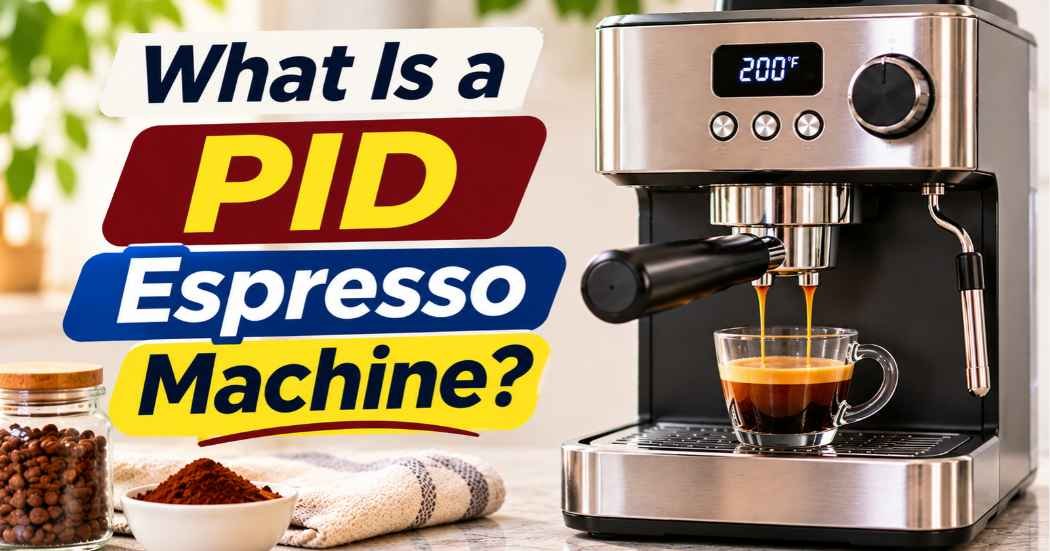
Quick answer: What is a PID espresso machine? It is a machine with a small controller that keeps the brew temperature steady. PID stands for Proportional-Integral-Derivative. The controller reads the heat all the time and adjusts the heater to match your target.
The result is more even shots. Many PID machines also let you pick the temperature yourself. Below you will find how it works, a comparison chart, temperature tips, pros and cons, what a PID can and cannot do, and a full FAQ.
You may see “PID” on a machine page and wonder if it is worth the extra cost. That is a fair question. Temperature changes the taste of espresso more than most people expect. A shot that is a few degrees too cool can taste sour. A shot that is too hot can taste bitter and harsh.
This guide explains the PID in plain words. It also shows what it can fix, what it cannot fix and who should pay for one.
What Is a PID Espresso Machine?
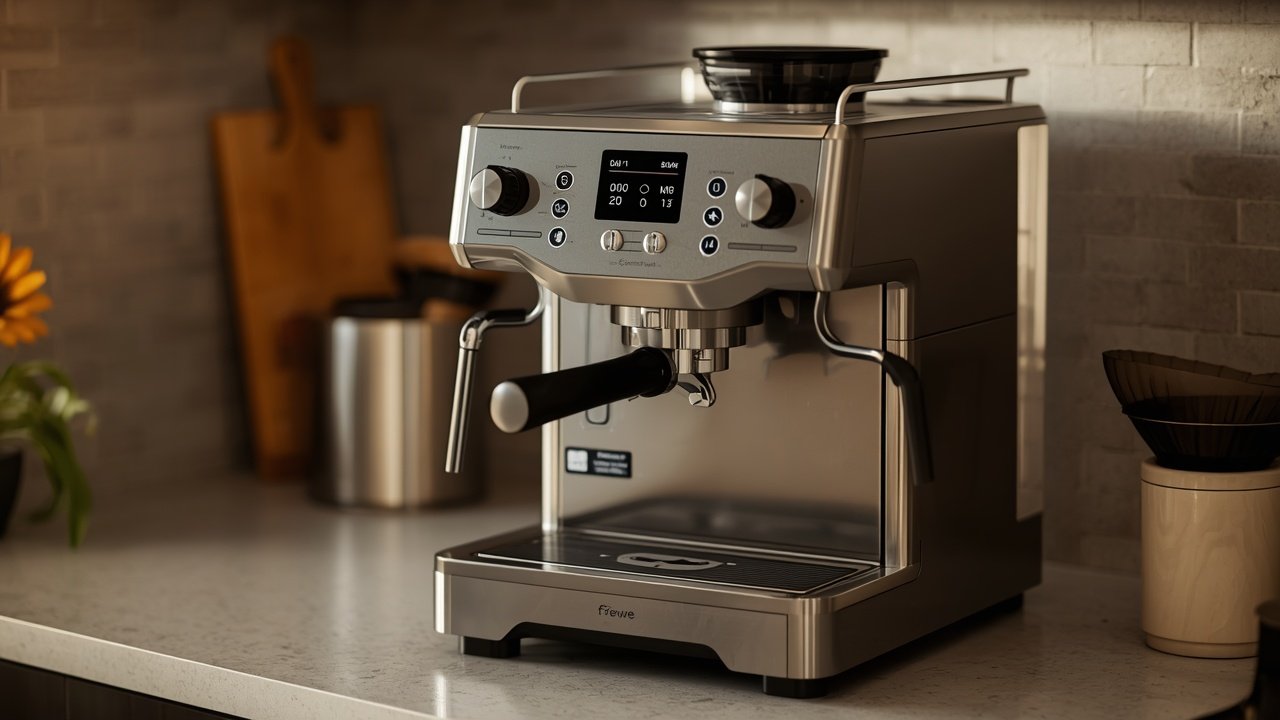
A PID espresso machine has a temperature controller built into its electronics. The controller works with a sensor that reads the temperature of the boiler or heating block. It then decides how much power the heater needs.
The name comes from a math method used in many industries. The three letters each describe one job.
- Proportional looks at how far the heat is from your target. A big gap means more power.
- Integral fixes small errors that stay for a long time, so the heat does not drift.
- Derivative watches how fast the heat is moving and eases off early, so it does not overshoot.
Together, they keep the temperature close to the number you want. Seattle Coffee Gear explains that PID controllers use the PID method to hold the machine at the brew temperature. Basic machines often use a simple thermostat instead.
How a PID Controlled Espresso Machine Works
If you ask what is a PID controlled espresso machine doing all day, the answer is simple. It keeps checking and correcting. Here is the loop in order.
- You set a target temperature, or the machine uses its factory setting.
- A sensor reads the real temperature.
- The controller compares the two numbers.
- It turns the heater on or off in short bursts to close the gap.
- It repeats this loop nonstop, even while you pull a shot and cold water enters the system.
La Marzocco describes how the controller is constantly reading and modelling the boiler temperature and switching the heater on and off. A thermostat only reacts after the heat has already moved too far. A PID tries to act before that happens.
PID vs Thermostat: What Is the Difference?
Most entry machines use a thermostat. It switches the heater off at a high point and back on at a low point. The heat swings up and down between those two points. A PID keeps the swing much smaller.
| Feature | Thermostat machine | PID machine |
|---|---|---|
| How it controls heat | Simple on and off switch | Constant small adjustments |
| Temperature swing | Larger | Smaller |
| Set your own temperature | Usually no | Often yes |
| Shot to shot consistency | Needs timing tricks | Easier to repeat |
| Display | Often lights only | Often shows a number |
| Best for | Casual drinkers | People who want repeatable shots |
Some sellers say a good PID keeps swings within about half a degree Celsius. Treat that as a best case. Boiler size, build quality and room heat also matter. A PID is one part of good temperature control. It is not the whole answer.
What Is a PID for Espresso Machine Users? The Real Benefits
People who ask what is a PID for espresso machine owners usually want to know one thing. Will it make my coffee taste better? It can help in these ways.
- Shots taste more alike from one morning to the next.
- You can change one thing at a time when you dial in, because temperature stays fixed.
- You can raise the heat for light roasts and lower it for dark roasts.
- You waste less coffee on tests, because the machine behaves the same each time.
Best Temperature to Set on a PID Espresso Machine
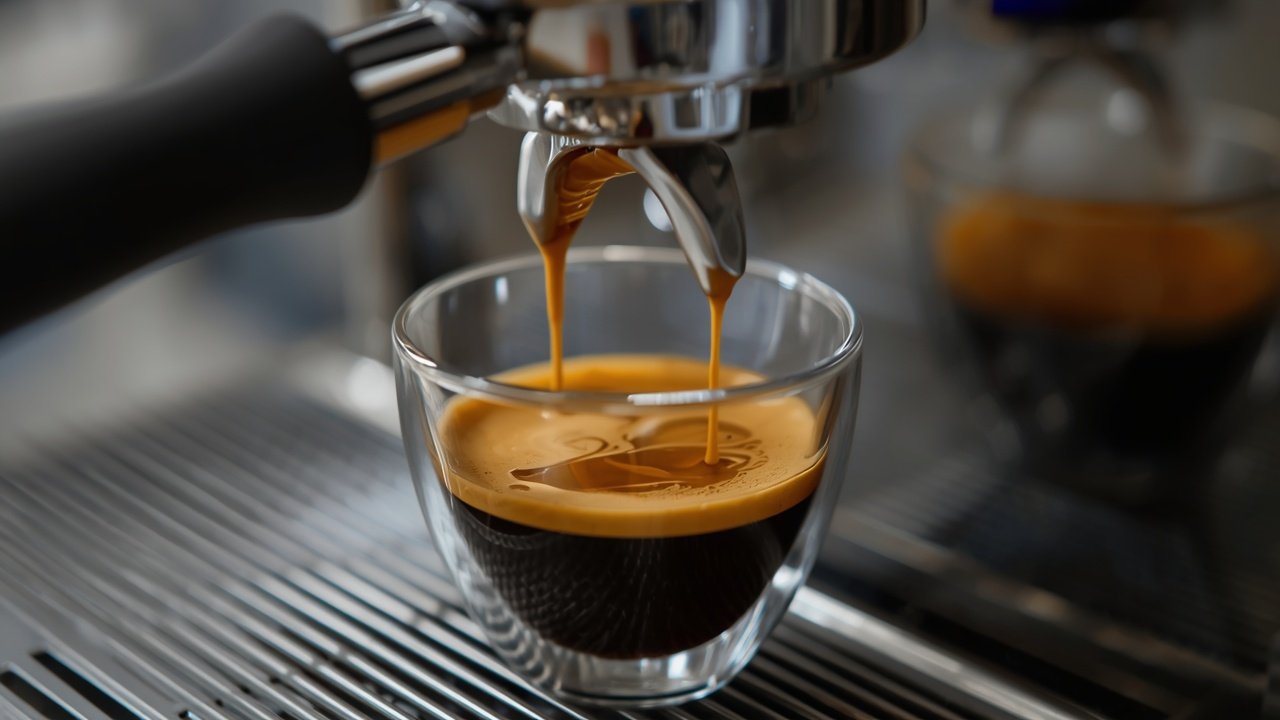
Most espresso tastes best when the water is between about 195°F and 205°F (90.5°C to 96°C). The chart below shows common starting points. They are not rules. Taste your shot and move in small steps of one or two degrees.
| Roast | Starting temperature | If it tastes sour | If it tastes bitter |
|---|---|---|---|
| Light | 200 to 205°F (93 to 96°C) | Raise by 1 to 2°F | Lower by 1 to 2°F |
| Medium | 195 to 200°F (90.5 to 93°C) | Raise by 1 to 2°F | Lower by 1 to 2°F |
| Dark | 190 to 195°F (88 to 90.5°C) | Raise by 1 to 2°F | Lower by 1 to 2°F |
Change only one thing at a time. If you also change grind or dose, you will not know what helped. Our guide on how to calibrate an espresso machine shows an easy order for dialing in.
Good to know: The number on the screen is usually the temperature the machine reads inside. It may not match the water that hits your coffee. Seattle Coffee Gear has a full article on whether you can trust the temperature on your screen. Use the number as a guide and trust your taste.
Pros and Cons of a PID Espresso Machine
| ✔ Pros | ✘ Cons |
|---|---|
| Steadier brew temperature | Usually costs more than a basic model |
| Easier to repeat a good shot | More menus and settings to learn |
| Lets you tune heat for each roast | The screen number can differ from the water at the coffee |
| Helps you dial in faster | Will not fix a bad grind or stale beans |
| Often found on better built machines | Extra electronics can mean a harder repair |
What a PID Can and Cannot Do
| A PID can | A PID cannot |
|---|---|
| Hold the heat close to your target | Fix a grind that is too fine or too coarse |
| Let you set a new target, on many models | Make old beans taste fresh |
| Reduce big heat swings between shots | Replace a good tamp and an even dose |
| Make shots easier to repeat | Remove scale from the boiler |
| Help you learn how heat changes taste | Guarantee the water at the puck matches the screen |
Water quality matters too. Scale can coat the heater and block flow. Read our guide on the best water for espresso machine use, so your PID machine stays healthy. Fresh grounds help as well, so see our tips on the best ground coffee for espresso machine shots.
Is a PID Espresso Machine Worth It?
It depends on how you drink coffee. Use this list to decide.
- A PID is worth it if you pull several shots a day and want the same taste each time.
- It is worth it if you switch between light and dark roasts and want to tune the heat.
- It is worth it if you enjoy dialing in and learning why a shot changed.
- You can skip it if you mostly drink milk drinks, where flavor details fade.
- You can skip it if you want the lowest price and drink one cup now and then.
If you are still picking a type of machine, read what is a semi-automatic espresso machine. Many PID machines are semi-automatic.
Common PID Espresso Machine Problems and Easy Fixes
| Problem | Likely cause | Easy fix |
|---|---|---|
| Shots taste sour | Water is too cool, or the machine is not fully warm | Warm up longer, rinse the portafilter with hot water, then raise the target by 1 to 2°F |
| Shots taste bitter | Water is too hot for the roast | Lower the target by 1 to 2°F |
| Screen number moves a lot | Machine is still heating, or the steam boiler is on | Wait until the number settles before you start |
| Temperature will not change | Setting is locked or you are in the wrong menu | Check the manual for the right menu |
| Error message or flashing light | Sensor, heater or low water issue | Fill the tank, power cycle, then follow the manual |
If the machine stops working, our guide on why is my espresso machine not working lists simple checks you can do at home.
Where Did the PID Come From?
PID control is much older than espresso. Factories have used it for decades. Home coffee fans began adding it to espresso machines in the early 2000s. Barista Hustle notes that the first PID controllers were retrofitted to espresso machines in the early 2000s by Andy Schecter and David Schomer. Today, PID control is common on better home machines. You can read the general math idea on Wikipedia’s PID controller page.
PID Espresso Machine FAQs
What is a PID controlled espresso machine?
It is an espresso machine that uses a PID controller to manage its heater. The controller reads the temperature and adjusts the power to keep it near your target. The goal is steady heat from shot to shot.
What is a PID in an espresso machine?
It is the small controller and software that manage heat. PID stands for Proportional-Integral-Derivative. You often see it as a small screen with a temperature number and a few buttons.
What is a PID on an espresso machine used for?
It keeps the brew temperature steady and, on many models, lets you change it. Use it to fine tune taste for different roasts.
Does a PID make espresso taste better?
It can make your shots more even, and that helps you find a taste you like. It will not fix poor beans, a wrong grind or old coffee. Good basics still matter most.
What temperature should I set on my PID?
Start near 200°F (93°C) for medium roasts. Go a little higher for light roasts and a little lower for dark roasts. Change by one or two degrees at a time.
Can I add a PID to a machine that does not have one?
Some people do this with kits, but it is a hobby project. Seattle Coffee Gear warns that adding a PID will void your warranty. Check your warranty and ask a trained technician first.
Is a PID the same as a thermostat?
No. A thermostat switches the heater fully on or off. A PID makes smaller, smarter changes, so the temperature swings less.
Do I need to descale a PID machine?
Yes. Scale builds up in any machine that heats water. Descale on the schedule in your manual and use good water.
Final Thoughts
A PID espresso machine gives you steadier heat and, often, control over the number. That makes it easier to repeat a shot you love. It will not replace fresh coffee, a good grind and clean water. If you pull shots often and like to fine tune, a PID is a smart upgrade. If you want simple milk drinks at a low price, a basic machine may be enough.