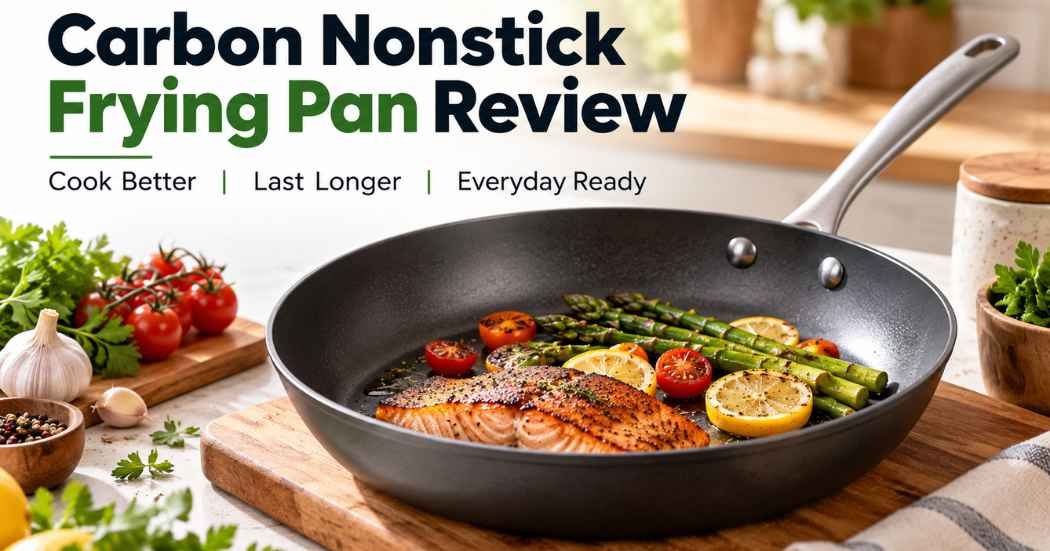
If you’ve been eyeing carbon steel cookware but don’t want to deal with the fuss of traditional seasoning, the Misen Deeper Carbon Nonstick Skillet might have caught your eye. This Misen Carbon Nonstick Frying Pan Review breaks down what the pan actually offers, based on what Misen and Amazon confirm about it, so you can decide if it fits your kitchen.
This 12-inch carbon steel skillet is made from nitrided carbon steel instead of a sprayed-on nonstick coating. That’s a different approach than most nonstick pans use, and it comes with its own trade-offs worth understanding before you buy.
This carbon steel cookware review walks through what’s confirmed about the pan’s design, how it’s likely to perform in everyday cooking, and who it makes sense for. Nothing here is based on hands-on testing — it’s an analysis of the manufacturer’s listed specs and claims, clearly marked as such.
Quick Verdict
The Misen Deeper Carbon Nonstick Skillet is a 12-inch carbon steel skillet with a nitrided carbon steel (hardened) surface instead of a traditional nonstick coating. Misen markets it as a durable alternative to disposable coated nonstick pans, with no PFOA, PTFE, or PFAS involved.
Strengths, based on the listing: wide cooktop compatibility (including induction), a high oven-safe rating, taller walls for more cooking capacity, and a coating-free surface that Misen says won’t flake or peel.
Possible drawbacks: carbon steel pans generally need more attentive care than coated nonstick pans, and the exact seasoning or maintenance routine isn’t fully detailed in the listing. Customer reviews are limited (14 ratings at the time of writing), so there isn’t a large track record to point to yet.
Who it may suit: cooks who want a nonstick-style pan that can also handle higher heat than typical coated nonstick, and who don’t mind a little extra care in exchange for that durability.
Misen Deeper Carbon Nonstick Skillet: At a Glance
Spec | Details |
Product | Misen Deeper Carbon Nonstick Skillet |
Size | 12 inches |
Material | Carbon steel (nitrided) |
Cooking surface | Nitrided carbon steel, no added coating |
Cooktop compatibility | Gas, electric coil, smooth-surface induction |
Oven safety | Rated to 1100°F |
Dishwasher guidance | Not confirmed in the listing |
Best for | Sautéing, searing, eggs, pancakes, sauces, one-pan meals |
Since dishwasher-safe status isn’t stated in the product listing, it’s worth checking Misen’s care instructions directly before assuming either way.
What Is the Misen Deeper Carbon Nonstick Skillet?

At its simplest, this is a carbon steel frying pan that’s gone through a nitriding process, resulting in nitrided carbon steel. Nitriding hardens the metal’s surface by exposing it to nitrogen at high heat. Misen says this creates a naturally slick surface without needing a sprayed-on nonstick layer like Teflon.
That’s the key difference between this pan and a typical nonstick skillet. Most nonstick pans get their slickness from a coating applied to the metal. This one gets it from treating the metal itself. According to Misen, the surface also develops a patina over time — a layer that builds up with use and, per the brand, improves with more cooking.
The “Deeper” name in the Misen Deeper Carbon Nonstick Skillet refers to a design update: taller, straighter walls compared to a standard skillet. That extra depth is meant to give you more room for sauces, shallow braises, or bigger one-pan meals without things splashing over the edge.
Key Features
- Nitrided carbon steel surface — No Teflon coating to worry about flaking or wearing off over time, according to Misen.
- No PFOA, PTFE, or PFAS added — Relevant if you’re specifically trying to avoid these compounds in cookware.
- Aluminum core for heat distribution — Misen states this helps reduce hot spots, which is a common complaint with plain carbon steel pans.
- Taller walls — More usable volume in the same 12-inch footprint, useful for recipes that involve liquid or a lot of ingredients.
- 1100°F oven-safe rating — A notably high ceiling that goes well beyond what most home ovens or broilers reach.
- Multi-cooktop compatibility — Works on gas, electric coil, and induction, so it’s not limited to one type of stove.
Cooking Performance
Nothing here reflects actual test results — this is a reasonable read on what the pan’s design suggests it can do, based on how carbon steel cookware generally behaves.
Eggs: This is usually where a nonstick-style surface matters most. A well-maintained carbon steel or nitrided surface can handle eggs reasonably well, though it typically needs some preheating and a bit of oil or butter to perform at its best — more so than a coated Teflon pan.
Vegetables: Carbon steel pans tend to do well here, especially for sautéing or getting a light char, since they can take higher heat than most coated nonstick pans.
Meat: This is a strong point for carbon steel in general. The material handles high heat well, which matters for searing. The 1100°F oven rating also suggests the pan can go from stovetop sear to oven finish.
Fish: Delicate fish fillets are one of the trickier tests for any nonstick surface. Without independent testing data, it’s not possible to say how well this specific surface releases fish compared to other options.
Sautéing and everyday meals: The taller walls should help here, giving more room to toss ingredients or build a one-pan dish without crowding.
Nonstick Performance
It’s worth being clear about what “nonstick” means with this pan, since it’s not the same mechanism as a Teflon-coated skillet. Misen describes the nitrided surface as naturally slick and easy-release, but it’s not marketed as a zero-maintenance nonstick surface the way a coated pan is.
In practice, carbon steel surfaces like this one usually need proper preheating, enough fat or oil, and consistent use to maintain good food release. The “patina” Misen mentions — a seasoned layer that builds with cooking — is generally understood in carbon steel cookware to improve nonstick behavior over time, though the exact process isn’t detailed in this listing.
We’re not going to claim food will glide off this pan effortlessly. That kind of claim isn’t backed by the information available, and it’s the sort of promise that rarely holds up evenly across every food type anyway.
Heat Distribution and Heat Retention
Misen states that an aluminum core is built into the pan to help even out heat and respond quickly to temperature changes. Aluminum conducts heat well and is a common addition to carbon steel and stainless pans specifically to fix the uneven heating that plain carbon steel can have.
What this likely means in practice: fewer scorched spots and quicker adjustments when you turn the heat up or down, compared to an aluminum-core-free carbon steel pan. No specific temperature data or heat-retention numbers are available, so we can’t confirm exact performance figures.
Is It Good for Induction?
Yes — induction compatibility is confirmed by Misen, which makes this an induction-compatible frying pan right out of the box. The pan is also listed as compatible with gas and electric coil cooktops. If your kitchen uses an induction stove, this is one of the boxes checked without any question marks.
Oven Safety
The pan is rated oven-safe to 1100°F, which is confirmed on the listing. That’s a high number — well above what typical home ovens or broilers reach — so in practical terms, the pan itself shouldn’t be a limiting factor for oven use.
One thing to flag: this rating applies to the pan body. The listing doesn’t specify whether a lid or handle has the same rating, so if you’re using an accessory with this pan, it’s worth checking that separately before putting it under a broiler or in a very hot oven.
Cleaning and Care
The product listing doesn’t spell out a detailed cleaning routine or confirm dishwasher safety. Carbon steel pans in general are usually recommended to be hand-washed rather than run through a dishwasher, since harsh detergents and prolonged soaking can affect the seasoned surface. But since Misen’s own care instructions for this specific model aren’t included in the listing data provided, that’s an assumption based on typical carbon steel care rather than a confirmed fact for this pan.
If maintaining the surface matters to you, it’s worth checking Misen’s official care guide before your first use.
Pros and Cons
Pros
- No Teflon coating, so there’s nothing to flake or peel off over time
- No added PFOA, PTFE, or PFAS
- Works across gas, electric, and induction cooktops
- High oven-safe rating (1100°F) for stovetop-to-oven cooking
- Taller walls give more usable cooking space in the same footprint
- Aluminum core aimed at reducing hot spots
Cons
- Not a traditional zero-maintenance nonstick surface — likely needs more attentive care
- Dishwasher safety isn’t confirmed in the listing
- Limited customer review history (14 ratings) to judge long-term durability
- Nitrided carbon steel is a newer category for many home cooks, so there’s a learning curve compared to coated nonstick
- No independent performance data available to confirm real-world nonstick results
Who Should Buy the Misen Deeper Carbon Nonstick Skillet?
This pan is worth considering if you want the durability and high-heat searing ability of carbon steel, but you’d like an easier starting point than a completely bare, traditionally seasoned pan. It also fits cooks who specifically want to avoid PFOA, PTFE, and PFAS coatings, and who cook on induction or plan to move food from stovetop to oven often.
Who Should Skip It?
If you want a pan you can wipe clean in seconds with zero technique required, a standard coated nonstick pan is probably the simpler choice. The same goes if you’re not interested in learning any carbon steel maintenance at all — this isn’t a completely hands-off pan the way a basic Teflon skillet is.
Misen Carbon Nonstick vs Traditional Nonstick
Factor | Misen Carbon Nonstick | Traditional Coated Nonstick |
Surface | Nitrided carbon steel | Sprayed-on coating, often PTFE-based |
Maintenance | Some care needed to build and maintain patina | Minimal care, but coating can wear over time |
Heat tolerance | High; oven-safe to 1100°F | Usually lower; check the manufacturer’s limit |
Metal utensil use | Generally more tolerant | Usually discouraged |
Cooking style | Searing, sautéing, high-heat cooking | Delicate foods, low-to-medium heat |
Best for | Cooks wanting durability and higher heat | Cooks wanting simplicity and easy cleanup |
Neither option is a clear “winner” here — they suit different priorities.
Misen Carbon Nonstick vs Stainless Steel
Factor | Misen Carbon Nonstick | Stainless Steel |
Ease of cooking | Easier food release, especially once seasoned | Can stick without enough fat or heat control |
Cleaning | Needs some care to protect the surface | Generally dishwasher-safe and low-maintenance |
Heat handling | High heat tolerance | High heat tolerance |
Food release | Better for eggs and delicate items | Better suited to searing and browning |
Maintenance | Moderate | Low |
Best use cases | Eggs, sautéing, everyday nonstick-style cooking | Searing, deglazing, pan sauces |
Is the Misen Deeper Carbon Nonstick Skillet Worth It?
This Misen Carbon Nonstick Frying Pan Review shows that, based on what’s confirmed in the listing, this pan offers a reasonable middle ground between a coated nonstick pan and a fully traditional carbon steel skillet. It’s built to handle higher heat than most nonstick pans, works across cooktop types including induction, and skips the coatings some buyers want to avoid.
The trade-off is that it likely asks a bit more of the cook than a basic Teflon pan does. If that’s a fair exchange for you — more durability and heat tolerance in return for a bit more attention — it’s a reasonable pick. If you just want to unbox a pan and start cooking with zero learning curve, that’s a fair reason to look elsewhere.
Final Verdict
To wrap up this Misen Carbon Nonstick Frying Pan Review, the best feature here is the combination of high heat tolerance and a coating-free nonstick surface — something that’s genuinely hard to find in the same pan. The main limitation is the lack of detailed care instructions and limited customer review history to lean on.
This pan makes the most sense for someone who cooks often, wants a pan that can go from stovetop sear to oven finish, and doesn’t mind learning a bit about carbon steel care along the way. If that’s not you, a standard coated nonstick pan may be the simpler fit.
Check the latest price and availability on Amazon.
FAQ
Is the Misen Carbon Nonstick Skillet really nonstick?
As a nitrided carbon steel pan, it has a naturally slick surface from the nitriding process, not a sprayed-on coating. Misen describes it as easy-release, but like most carbon steel pans, food release likely improves with proper heating, enough oil, and regular use.
Is the Misen Deeper Carbon Nonstick Skillet good for induction?
Yes, induction compatibility is confirmed on the product listing, along with gas and electric coil cooktops.
Is the 12-inch Misen skillet oven safe?
Yes, it’s rated oven-safe to 1100°F. It’s not confirmed whether any included lid or handle shares that same rating.
How do you clean the Misen Carbon Nonstick Skillet?
The listing doesn’t specify an exact cleaning method or confirm dishwasher safety. Hand-washing is the typical recommendation for carbon steel cookware in general, but check Misen’s official care guide for this specific model.
Can you use metal utensils with it?
This isn’t directly confirmed in the listing. Carbon steel pans are usually more tolerant of metal utensils than coated nonstick pans, but that’s a general pattern, not a confirmed claim for this exact product.
Is a 12-inch skillet good for family cooking?
A 12-inch pan with taller walls, like this one, generally offers enough room for small-to-medium family meals or one-pan dishes. It may feel tight for larger households cooking bigger batches.
How is carbon nonstick different from traditional nonstick?
Traditional nonstick pans use a sprayed coating, often Teflon, to create a slick surface. This pan gets its nonstick quality from a hardened, nitrided carbon steel surface instead, which Misen says avoids PFOA, PTFE, and PFAS.