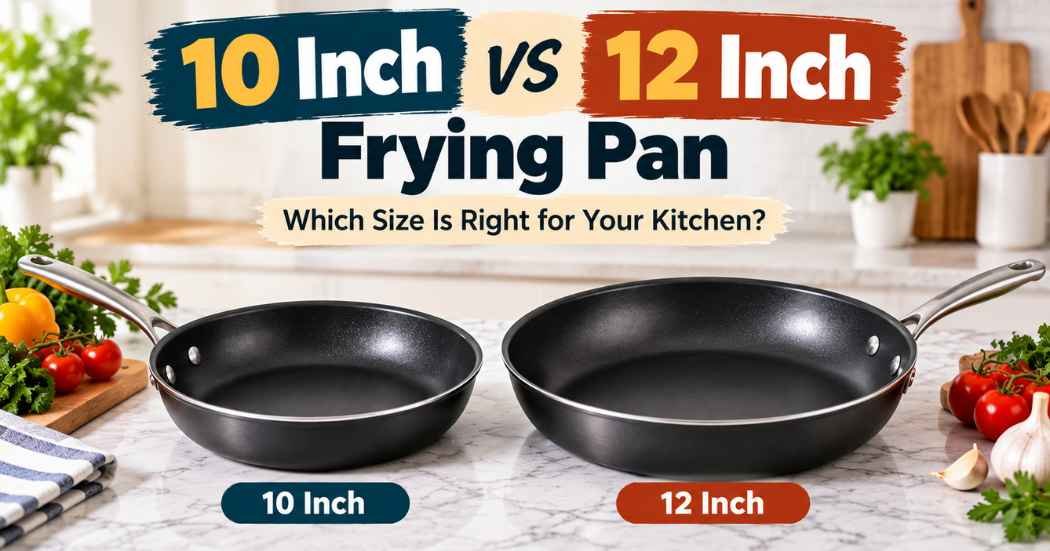
Buying a new pan sounds easy. Then you open Amazon and see two sizes side by side. Now you have to pick.
This is the classic 10 inch vs 12 inch frying pan problem. The two pans look almost the same in photos. But size changes how a pan cooks, how it feels in your hand, and where it fits in your kitchen.
This guide uses two real pans as examples: the HexClad 10-inch and the HexClad 12-inch. Both use the same hybrid nonstick design. The only real difference is size. That makes them a clean way to see what changes when you go bigger.
We won’t tell you one size is “the best.” We’ll show you what each size does well, and let you match that to your own kitchen.
Quick Answer
Short on time? Here’s the fast version.
- Choose the 10 inch frying pan if you cook for one or two people most nights.
- Choose the 12 inch frying pan if you cook for a family, or you like big batches.
- Best for small households: 10-inch.
- Best for family meals: 12-inch.
- Best for easy handling: 10-inch. It’s lighter and easier to flip.
- Best for max cooking space: 12-inch. More room means less crowding.
Still not sure? Keep reading. We’ll break down every part of the 10 inch vs 12 inch skillet choice.
10 inch vs 12 inch frying pan at a Glance
Feature | 10-Inch Pan | 12-Inch Pan |
Pan size | Smaller, compact | Larger, wider base |
Cooking surface | Less surface area | More surface area |
Ideal serving size | 1 to 2 people | 3 to 5 people |
Best for | Everyday small meals | Family dinners, batch cooking |
Handling | Lighter, easier one-hand flip | Heavier, needs two hands sometimes |
Storage | Fits small cabinets and drawers | Needs more shelf or hook space |
Cooking larger portions | Limited room | Can hold more food at once |
Best use cases | Eggs, single servings, quick sides | Stir-fry, big cuts of meat, one-pot meals |
HexClad 10-Inch Frying Pan Review
What It Is
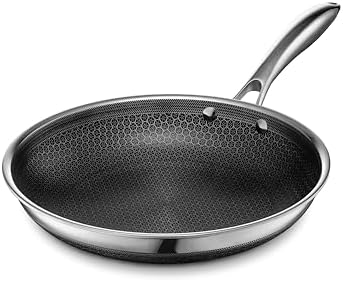
The HexClad 10-inch pan is a 10 inch frying pan built with a mix of stainless steel and ceramic nonstick coating. It has a laser-etched hex pattern on the cooking surface. HexClad says this design helps food sear while still releasing easily.
It’s made with a tri-ply build. That means layers of metal, including an aluminum core, for even heat.
Who It Is Best For
This pan fits people who cook small meals most days. Think one person living alone, or two people sharing dinner. It also works well as a side pan even in a bigger household, for things like sauces or veggies.
Cooking Capacity
At 10 inches across, this pan gives you a smaller cooking surface than the 12-inch version. That’s fine for smaller portions. It gets tight fast if you try to cook a big batch of food in it.
Handling
At about 3 pounds, this pan is light. It’s easier to lift with one hand, tilt for plating, or shake while sautéing. If your wrist gets tired from heavy cookware, this size will feel more comfortable.
Everyday Cooking
For daily use, this pan handles the basics well: eggs, a quick grilled cheese, a small portion of sautéed vegetables, or a single chicken breast. It’s a good “grab it every day” pan for smaller meals.
Storage
Because it’s smaller, this pan takes up less room in a cabinet or on a pot rack. If your kitchen storage is tight, this is a real advantage.
Advantages
- Light and easy to control
- Fits smaller stovetop burners
- Great for solo or two-person meals
- Simple to store
Potential Drawbacks
- Not enough room for big family meals
- Ingredients can crowd if you try to cook too much at once
- May need a second pan for larger gatherings
Best Use Cases
Solo meals, small side dishes, breakfast for one or two, and quick weeknight dinners for a couple.
[Check the HexClad 10-Inch Frying Pan on Amazon]
HexClad 12-Inch Frying Pan Review

What It Is
The HexClad 12-inch pan uses the same hybrid design as the 10-inch version. Same hex pattern, same tri-ply build, same aluminum core for heat. The main change is the larger size, which shifts what the pan is good at.
Who It Is Best For
This is a fit for families, meal preppers, or anyone who cooks in bigger batches. If you regularly cook for three or more people, the extra space starts to matter a lot.
Cooking Capacity
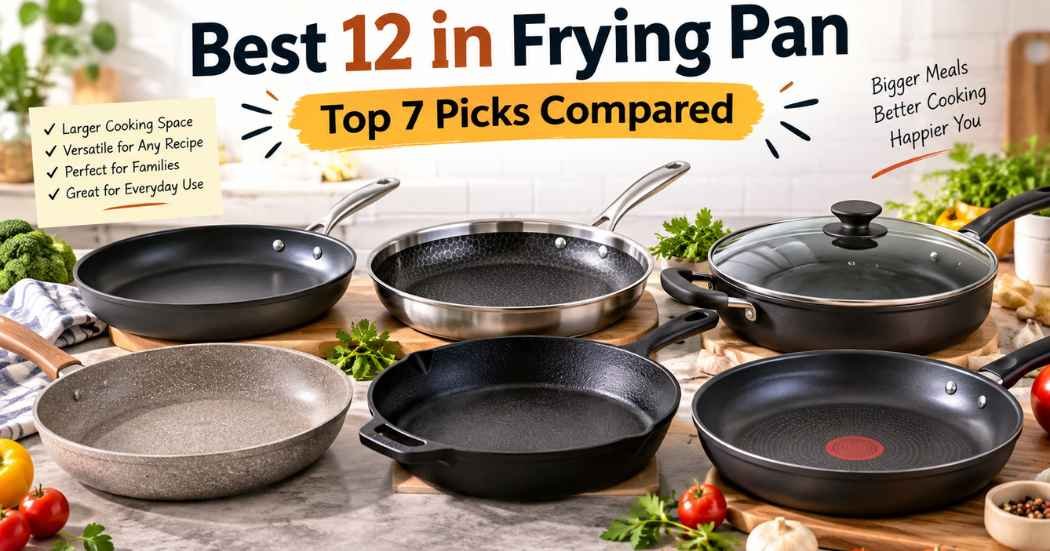
This is a 12 inch frying pan, so it has noticeably more surface area than the 10-inch. That extra room means you can cook more food at once without piling ingredients on top of each other.
Handling
At around 4 pounds, it’s heavier than the 10-inch pan. It still has stay-cool handles, but the extra weight and wider base mean you may want two hands when moving it, especially when it’s full of food.
Everyday Cooking
This pan is built for bigger jobs: a full stir-fry, several chicken breasts at once, a family-size batch of fried rice, or a full pound of bacon without crowding.
Storage
The larger size means it needs more cabinet space, a bigger pot rack slot, or its own hook. If your kitchen storage is limited, this is worth planning for before you buy.
Advantages
- More cooking space for bigger meals
- Less crowding when cooking multiple ingredients
- Good for one-pot family dinners
- Same nonstick hybrid coating as the smaller size
Potential Drawbacks
- Heavier, so it’s harder to manage one-handed
- Takes up more stovetop and storage space
- Can feel like overkill for small, everyday meals
Best Use Cases
Family dinners, batch cooking, stir-fry, large cuts of meat, and meal prep for the week.
[Check the HexClad 12-Inch Frying Pan on Amazon]
10-Inch vs 12-Inch: Key Differences
Cooking Surface
The 12-inch pan simply gives you more flat cooking space. That space matters most when you’re cooking food that needs to lay flat, like chicken breasts or pancakes.
Portion Size
A 10 inch frying pan for 1-2 people works well because the portions are small enough to fit without crowding. Try to cook a family meal in it, and you’ll likely need to cook in batches.
Number of People
As a rough guide: 10-inch pans suit one to two people. A 12 inch frying pan for family meals suits three or more, though this depends on your typical portion sizes.
Weight and Handling
The 10-inch pan is lighter and easier to control. The 12-inch pan is heavier once you add food and needs a firmer grip, especially when full.
Ingredient Crowding
Crowding a pan traps steam and stops food from browning well. A smaller pan crowds faster with the same amount of food. This is one of the biggest practical differences between the two sizes.
Stove Space
Not every stovetop has room for a large pan, especially on smaller burners or tight kitchen layouts. Check your burner size before buying a 12-inch pan.
Storage
Smaller kitchens often do better with the 10-inch pan simply because it takes up less space in cabinets, drawers, or on a rack.
Cleaning
Both pans use the same nonstick coating, so cleaning method is similar. The larger surface on the 12-inch pan just takes a little more time and water to clean.
Cooking Multiple Ingredients
If you often cook a protein and vegetables together in one pan, the 12-inch size gives you more room to keep them separate while they cook.
Everyday Versatility
The 10-inch pan tends to get more daily use in smaller households because it matches typical portion sizes. The 12-inch pan becomes the go-to for bigger meals and special cooking days.
Which Size Is Better for Different Foods?
Eggs
A 10-inch pan works well for one or two eggs at a time. If you’re cooking eggs for a full family, the 12-inch gives more room to fit several at once.
Pancakes
The 12-inch surface allows more room for larger pancakes or cooking two at a time. The 10-inch works fine for single, smaller pancakes.
Vegetables
Small portions of vegetables cook well in the 10-inch pan. Larger batches, especially if you want good browning instead of steaming, benefit from the extra room in the 12-inch pan.
Chicken Breasts
One or two chicken breasts fit fine in the 10-inch pan. Cooking three or four at once calls for the 12-inch pan’s extra surface.
Steak
A single steak works in either size. Cooking two steaks at once, with room to move them, is easier in the 12-inch pan.
Stir-Fry
Stir-fry needs room to move ingredients around without spilling. The 12-inch pan is the better fit here, especially for family-size portions.
Fried Rice
Fried rice for one or two people can work in the 10-inch pan. A full family batch fits more comfortably in the 12-inch pan.
Pasta Sauces
Simmering a sauce for a couple of servings works fine in the 10-inch pan. Bigger batches of sauce, especially with added vegetables or meat, need the extra space of the 12-inch pan.
Family Meals
For most full family dinners, the 12-inch pan is the more practical choice simply because of the food volume involved.
10-Inch vs 12-Inch for Different Households
1 Person
The 10-inch pan is usually enough. It matches single-serving portions and is easy to clean and store.
2 People
Still often a good fit for the 10-inch pan, especially for simpler meals like eggs, small proteins, or side dishes. Bigger appetites or bigger meals may push you toward the 12-inch.
3–4 People
This is where the 12-inch pan usually starts to make more sense. Cooking for this many people in a 10-inch pan often means cooking in batches.
Larger Families
For five or more people, the 12-inch pan becomes the more practical daily pan. Even then, some households keep a 10-inch pan on hand for smaller side dishes or solo meals.
Appetite, cooking style, and how often you batch-cook all affect this. Use these as a starting point, not a hard rule.
Pros and Cons
HexClad 10-Inch
Pros:
- Light and easy to handle
- Good for solo or two-person meals
- Takes up less storage space
- Fits smaller stovetop burners
Cons:
- Limited space for larger meals
- Ingredients crowd faster
- Not ideal for big families
HexClad 12-Inch
Pros:
- More cooking surface for larger meals
- Handles multiple ingredients without crowding
- Good for family dinners and batch cooking
Cons:
- Heavier and needs more careful handling
- Takes up more stovetop and storage space
- Can feel too big for small, everyday meals
Which One Should You Buy?
Buy the 10-inch pan if you mostly cook small meals, live alone or with one other person, or have limited stovetop and storage space.
Buy the 12-inch pan if you regularly cook for three or more people, like to batch cook, or want more room to work with larger cuts of meat.
Choose 10-inch for smaller portions and easier handling. Choose 12-inch for more cooking space and larger meals. Neither size is automatically “better.” The right pick depends on how you actually cook.
Final Verdict
There’s no single winner in the 10 inch vs 12 inch frying pan debate. The right choice depends on your household size, your usual portion sizes, and how much room you have on your stove and in your cabinets.
If you’re mostly cooking for one or two people and want something light and easy to store, the 10-inch pan is the practical pick. If you regularly cook for a family or like to prep food in bigger batches, the 12-inch pan gives you the room to do that without crowding your ingredients.
Some households end up happy with both sizes, using the smaller pan for daily meals and the larger one for bigger cooking days.
FAQ
Is a 10-inch frying pan big enough for two people?
Yes, for most everyday meals. It may feel tight for bigger appetites or heartier dishes.
Is a 12-inch frying pan too big for one person?
It can feel oversized for daily single-serving meals, but it still works fine for batch cooking or meal prep.
Is 10-inch or 12-inch better for eggs?
The 10-inch pan is usually enough for one or two eggs. The 12-inch pan gives more room if you’re cooking eggs for a full family.
Which frying pan size is best for a family?
The 12-inch pan is generally the more practical size for family meals, since it holds more food at once.
Is a 12-inch skillet harder to handle?
It is heavier and wider, so it takes a bit more effort to lift and move, especially with food in it.
Does a 12-inch frying pan cook more food?
It has more surface area, so yes, it can hold and cook more food at one time without crowding.
What is the most versatile frying pan size?
Many home cooks find the 10-inch size handles the widest range of everyday, smaller meals, while a 12-inch pan handles bigger cooking jobs. Some households keep both.
Should I buy a 10-inch or 12-inch frying pan?
It depends on how many people you cook for and how much stovetop and storage space you have. Smaller households often lean toward 10-inch; families often lean toward 12-inch.
Is a 10-inch frying pan easier to store?
Yes. Its smaller size takes up less room in cabinets, drawers, or on a pot rack.
What is the difference between a 10-inch and 12-inch frying pan?
The main difference is cooking surface size, which affects how much food fits at once, how heavy the pan feels, and how much storage space it needs.