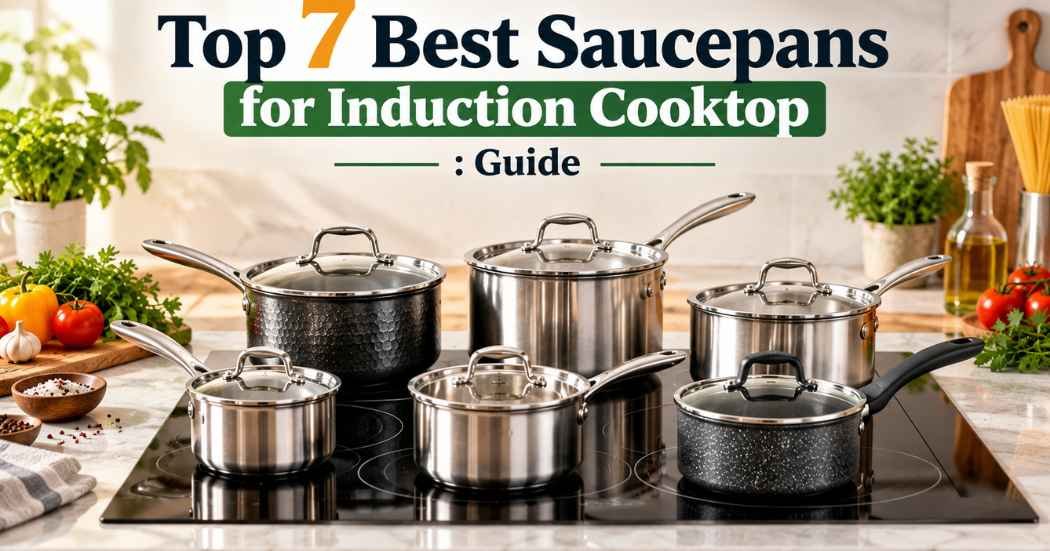
A saucepan looks simple until you try to buy one for an induction stove. Not every pot heats up the same way, and the wrong base means your stove just won’t turn on. Finding the best saucepans for induction cooktop use comes down to a handful of specs, not guesswork, and that’s the problem this guide solves.
We looked at seven induction-ready saucepans, from small 1-quart pans meant for melting butter and warming sauce, up to 3-quart pans built for soup and grains. Some use tri-ply stainless steel. Others use a hybrid nonstick surface, or a granite-style coating over aluminum. Each one handles heat, cleaning, and storage a little differently.
Below, we compare all seven side by side: build quality, capacity, oven safety, and who each pan actually fits. You’ll see a quick list, a comparison table, and a full breakdown of every pan’s strengths and weak spots. By the end, you should know exactly which saucepan belongs in your kitchen, and which ones to skip.
What Is an Induction-Ready Saucepan?
An induction-ready saucepan has a base that reacts to a magnetic field, which is how induction cooktops generate heat. Most induction saucepans use stainless steel, or a stainless steel base bonded to aluminum, since aluminum and copper alone won’t work on induction.
You’ll typically see two build styles: fully clad stainless steel (where layers of metal run through the whole pan) and hybrid nonstick, which pairs a stainless surface with a nonstick coating. Fully clad pans tend to heat more evenly. Hybrid and coated nonstick pans are easier to wipe clean and need less oil.
Saucepans usually range from 1 to 3.5 quarts. Smaller sizes suit sauces, eggs, and single servings. Larger sizes handle soups, grains, and small batches of stew.
Why These Products Made Our List
We compared these seven saucepans using the specifications each brand publishes: material, construction method, capacity, dimensions, weight, oven-safe temperature, and stated warranty coverage. We looked at how each pan’s design affects everyday tasks like heating evenly, cleaning up, and fitting into a small kitchen.
We didn’t rank these based on price promotions, popularity, or how many people bought them. The goal was to compare what each pan is actually built from and how that construction plays out in daily use, not which one sells the most.
Quick List — Top 7 Saucepans for Induction Cooktops
- HexClad 3-Quart Hybrid Nonstick Saucier
- All-Clad D3 Stainless Steel 3-Quart Sauce Pan
- HexClad 2-Quart Hybrid Nonstick Saucier
- Tramontina Signature Tri-Ply Clad 3-Quart Sauce Pan
- HexClad 1-Quart Hybrid Nonstick Saucier
- Cuisinart 1.5-Quart Stainless Steel Sauce Pan
- SENSARTE 1.5-Quart Nonstick Saucepan




Comparison Table
Product Name | Type | Best For | Standout Feature |
HexClad 3QT Hybrid Saucier | Hybrid nonstick/stainless | Everyday cooking for 2–3 people | Hexagon-etched surface rated oven-safe to 900°F |
All-Clad D3 3QT Sauce Pan | Fully clad stainless steel | Buyers who want a traditional pan | Tri-ply bonded to the rim, made in the USA |
HexClad 2QT Hybrid Saucier | Hybrid nonstick/stainless | Small households | Same hybrid coating in a more compact size |
Tramontina Tri-Ply 3QT | Fully clad stainless steel | Everyday soups and sauces | NSF certification and a lifetime warranty |
HexClad 1QT Hybrid Saucier | Hybrid nonstick/stainless | Single servings and small tasks | Compact 1-quart size for sauces and reheating |
Cuisinart 1.5QT Stainless | Fully clad stainless steel | Budget-conscious stainless fans | Measurement markings built into the pan |
SENSARTE 1.5QT Nonstick | Coated aluminum | Light, low-oil cooking | PFOA-free granite-style coating |
At a Glance
Best Overall: HexClad 3-Quart Hybrid Nonstick Saucier
Best Value: Tramontina Signature Tri-Ply 3-Quart Sauce Pan
Best Budget Pick: SENSARTE 1.5-Quart Nonstick Saucepan
Best for Small Households: HexClad 1-Quart Hybrid Nonstick Saucier
Best for a Traditional Stainless Pan: All-Clad D3 3-Quart Sauce Pan
Key Features to Compare
Before picking a stainless steel saucepan or a hybrid nonstick one, a few features matter more than the rest.
- Material and construction. Fully clad stainless heats evenly but needs oil to prevent sticking. Hybrid or coated nonstick pans release food easily but usually can’t handle metal utensils or extreme heat the same way.
- Oven-safe temperature. This varies a lot in this lineup, from 302°F to 900°F. If you move pans from stovetop to oven, check this number closely.
- Capacity. A 1-quart pan suits one or two servings. A 3-quart pan handles small soups, grains, or sauces for a family.
- Handle design. Stay-cool handles matter if you’re cooking on a hot burner for a while.
- Warranty. Several of these pans carry a lifetime warranty against manufacturing defects, though terms vary by brand.
Top 7 Product Reviews
HexClad 3QT Hybrid Nonstick Saucier — The All-Around Pick
Opening: A hybrid surface that sears like stainless steel but cleans up like nonstick, sized for everyday cooking.
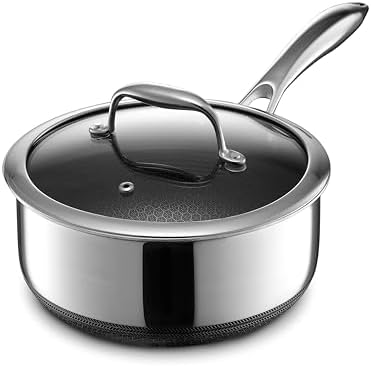
Overview: This is a 3-quart saucier built from aluminum, stainless steel, and a ceramic (TerraBond) coating, with a tempered glass lid. It’s tri-ply construction with an aluminum core, meaning heat spreads through the pan rather than sitting in one spot.
Key Features:
- Material: Aluminum core with a stainless steel and ceramic hybrid coating.
- Capacity: 3 quarts, suited to rice, oatmeal, sauces, and small batches of soup.
- Compatibility: Works on all home cooktops, including induction, per the manufacturer.
- Oven safety: Rated oven-safe up to 900°F (the tempered glass lid is rated to 400°F).
- Handles: Stay-cool design for stovetop use.
- Cleaning: Dishwasher-safe and metal-utensil safe, according to the listed specifications.
- Weight: 3.6 pounds, on the heavier side for this size.
What Makes It Different?
Most nonstick pans ask you to babysit them with silicone utensils and low heat. This one is built to handle metal tools and much higher oven temperatures than the other coated pan in this lineup. That’s a meaningful gap if you like to finish a dish under the broiler or sear before simmering.
Compared with the fully clad stainless pans here (All-Clad and Tramontina), this one trades a bit of that classic stainless sear for easier cleanup. Compared with the smaller HexClad sizes, the 3-quart version gives you more room for family-sized batches without moving up to a full stockpot.
Performance Analysis: Based on the listed tri-ply aluminum core, heat should move through the pan more evenly than a single-layer coated pan would manage. The higher oven-safe rating also suggests it’s built to handle more demanding stovetop-to-oven routines than a typical nonstick pan.
Pros:
- Handles metal utensils, unlike most nonstick cookware.
- High oven-safe rating for a coated pan.
- Dishwasher-safe for easier cleanup.
- Works across all cooktop types, including induction.
Cons:
- Heavier than the smaller HexClad sizes.
- Ceramic-hybrid coatings generally need more careful heat management than plain stainless.
- Tempered glass lid has a lower oven limit than the pan itself.
Best For: Home cooks who want one saucepan that handles both searing and everyday simmering without babying it in the dishwasher.
Who Should Skip It? Buyers who only cook for one person may find the 3-quart size larger than needed; the 1-quart version fits that use case better.
Why It Ranks #1: It combines a durable hybrid coating, metal-utensil compatibility, and a high oven-safe rating in a size that suits most households. The nearest competitor, the All-Clad D3, offers similarly strong construction, but this pan’s coating makes daily cleanup noticeably easier.
Bottom Line: This is a practical middle ground between a fully stainless pan and a fully nonstick one. If you want low-maintenance cleanup without giving up metal utensils, it’s worth the higher price.
All-Clad D3 Stainless Steel 3-Quart Sauce Pan — The Traditionalist’s Choice
Opening: A fully bonded tri-ply stainless pan built for buyers who want a classic, no-coating cooking surface.
Overview: This 3-quart saucepan is made from 18/10 stainless steel with tri-ply construction bonded fully to the rim. It’s manufactured in Canonsburg, Pennsylvania, and backed by a limited lifetime warranty.
Key Features:
- Material: 18/10 stainless steel, tri-ply bonded.
- Capacity: 3 quarts.
- Compatibility: Works on any stovetop, including induction, according to the listed specifications.
- Oven safety: Oven and broiler safe up to 600°F.
- Handles: Double-riveted stainless steel handles.
- Warranty: Limited lifetime warranty against manufacturing defects.
- Care: Handwashing is recommended by the manufacturer.
What Makes It Different?
Unlike the HexClad pans in this lineup, this one has no nonstick coating at all. That means better browning and deglazing for pan sauces, but it also means food can stick without enough fat or the right heat level. It’s the pan built for cooks who already know how to work with plain stainless steel.
Compared with the Tramontina tri-ply pan, this one has a higher oven-safe rating (600°F versus 500°F) and a longer manufacturing history, though both share a similar tri-ply construction.
Performance Analysis: Fully bonded tri-ply construction, with the layer running to the rim, generally distributes heat more evenly than pans bonded only at the base. For pan sauces and searing, that construction style tends to reduce hot spots along the pan walls, based on the listed design.
Pros:
- No coating to wear down over time.
- Tri-ply bonded fully to the rim, not just the base.
- Higher oven-safe rating than most coated pans here.
- Backed by a limited lifetime warranty.
Cons:
- Manufacturer recommends handwashing, despite some retailers listing it as dishwasher-safe.
- No nonstick surface, so it needs more attention to avoid sticking.
- Heavier stainless build than the smaller pans in this list.
Best For: Cooks who prefer plain stainless steel, want strong searing results, and don’t mind handwashing.
Who Should Skip It? Buyers who want easy cleanup with minimal oil should look at a nonstick or hybrid option instead.
Why It Ranks #2: Its construction quality rivals the HexClad 3-quart pan, but the lack of a nonstick coating means more daily maintenance, which is why it sits just below the top pick for general use.
Bottom Line: If you already cook with stainless steel and want a well-built, no-frills saucepan, this is a strong pick.
HexClad 2QT Hybrid Nonstick Saucier — Best for Smaller Batches
Opening: The same hybrid coating as the 3-quart version, sized down for smaller households and everyday portions.
Overview: A 2-quart saucier with the same aluminum, stainless steel, and ceramic hybrid build as its larger sibling, including a tempered glass lid and stay-cool handles.
Key Features:
- Material: Aluminum core with a hybrid stainless-ceramic coating.
- Capacity: 2 quarts, suited to smaller portions of grains, eggs, or sauce.
- Compatibility: Rated for all cooktops, including induction.
- Oven safety: Rated oven-safe up to 900°F.
- Weight: 3 pounds.
- Cleaning: Dishwasher-safe, per the listed specifications.
What Makes It Different?
This pan sits between the 1-quart and 3-quart HexClad sizes. It’s roomier than the 1-quart pan for cooking two servings at once, but more manageable for a couple or small household than the full 3-quart size.
Since it shares the same coating and oven-safe rating as the 3-quart version, the main difference between them is simply how much food fits, not how the pan performs.
Performance Analysis: With the same tri-ply aluminum core as the larger HexClad pan, heat distribution should be similarly even, just across a smaller cooking surface. That makes it a reasonable option for two people cooking modest portions.
Pros:
- Handles metal utensils like the larger HexClad pans.
- High oven-safe rating for its coating type.
- More manageable weight and size than the 3-quart version.
- Dishwasher-safe.
Cons:
- Too small for cooking in bulk or for larger families.
- Slightly less clearance if you’re rapidly stirring a fuller pot.
- Same hybrid coating considerations as the other HexClad sizes.
Best For: Couples or small households who want the HexClad hybrid coating in a more compact size.
Who Should Skip It? Anyone cooking for more than two or three people will likely find this pan too small for regular use.
Why It Ranks #3: It carries the same strong construction as the top pick, just in a size with more limited capacity, which is the only real trade-off keeping it below the 3-quart version.
Bottom Line: A solid, downsized version of the top pick, best suited for smaller everyday cooking tasks.
Tramontina Signature Tri-Ply Clad 3-Quart Sauce Pan — Best Value
Opening: A fully clad, NSF-certified stainless pan that covers the same construction quality as pricier brands.
Overview: This 3-quart saucepan uses tri-ply clad stainless steel with an aluminum core, is NSF-certified, and comes with a stainless steel lid instead of glass.
Key Features:
- Material: Stainless steel with an aluminum core, tri-ply clad.
- Capacity: 3 quarts.
- Compatibility: Works with induction, gas, electric, and ceramic glass cooktops.
- Oven safety: Rated oven-safe up to 500°F.
- Cleaning: Dishwasher-safe, per the listed specifications.
- Warranty: Backed by a lifetime warranty.
- Certification: NSF certified.
What Makes It Different?
This pan offers a similar tri-ply build to the All-Clad, at what’s typically a lower price point among stainless options. It includes a stainless steel lid rather than tempered glass, which raises its oven-safe ceiling for the lid itself compared with the glass-lidded HexClad pans.
It’s also the only pan here with NSF certification listed, which speaks to sanitation standards, though that’s a separate consideration from everyday cooking performance.
Performance Analysis: Tri-ply clad construction with an aluminum core should heat fairly evenly for its price range. The 500°F oven-safe rating covers most home-oven tasks, even if it falls short of the higher-rated pans in this list.
Pros:
- Tri-ply construction similar to pricier stainless brands.
- NSF certification.
- Lifetime warranty coverage.
- Stainless lid instead of glass, avoiding a lower oven-safe ceiling on the lid.
Cons:
- Lower oven-safe rating than the All-Clad or HexClad pans.
- No nonstick coating, so it needs oil and attention to avoid sticking.
- Made overseas rather than domestically, unlike the All-Clad pan.
Best For: Buyers who want tri-ply stainless construction without paying premium-brand pricing.
Who Should Skip It? Cooks who want the highest possible oven-safe rating should look at the HexClad or All-Clad pans instead.
Why It Ranks #4: Its tri-ply build competes well with the pricier stainless options, but the lower oven-safe rating keeps it a step behind the top three.
Bottom Line: A practical, well-built stainless saucepan for everyday cooking, especially for buyers comparing value against the premium brands here.
HexClad 1QT Hybrid Nonstick Saucier — Best for Small Servings
Opening: A compact hybrid saucepan built for single portions, sauces, and quick reheating jobs.
Overview: This 1-quart saucier shares the same hybrid nonstick coating as the larger HexClad pans, in a smaller size meant for tasks like melting butter, making gravy, or reheating a single serving of soup.
Key Features:
- Material: Aluminum core with a nonstick coating.
- Capacity: 1 quart.
- Compatibility: Rated for all cooktops, including induction.
- Oven safety: Rated oven-safe up to 900°F.
- Weight: 1.6 pounds, the lightest pan in this lineup.
- Warranty: Backed by a lifetime warranty.
What Makes It Different?
At 1.6 pounds, this is by far the lightest pan on this list, which matters if you’re cooking single portions often and want something easy to lift and pour. It’s not meant to replace a larger saucepan; it’s meant to sit alongside one for smaller jobs.
Compared with the SENSARTE and Cuisinart pans, which are closer in size, this one carries the same high oven-safe rating as its larger HexClad siblings, rather than the lower ratings seen on the coated or standard stainless small pans.
Performance Analysis: For small-batch tasks like melting butter or warming sauce, a lighter pan with quick heat response is generally easier to manage than a heavier one. Based on the listed materials, this pan should heat quickly given its smaller aluminum core.
Pros:
- Lightest pan in this comparison.
- High oven-safe rating for its size.
- Good fit for single servings and quick tasks.
- Backed by a lifetime warranty.
Cons:
- Too small for cooking for more than one or two people.
- Limited use for larger recipes like soups or grains in bulk.
- Same hybrid-coating care considerations as the larger HexClad pans.
Best For: People living alone, or anyone who frequently cooks single-serving sauces, eggs, or reheats small portions.
Who Should Skip It? Families or meal preppers cooking larger batches should choose the 2-quart or 3-quart HexClad instead.
Why It Ranks #5: It shares the same strong coating and oven rating as the larger HexClad pans, but its small capacity limits it to a narrower set of tasks, placing it below the more versatile sizes.
Bottom Line: A useful companion pan for small jobs, not a primary saucepan for regular family cooking.
Cuisinart 1.5-Quart Stainless Steel Sauce Pan — Best Budget Stainless Option
Opening: A straightforward stainless steel saucepan with built-in measurement markings and a mirror finish.
Overview: This 1.5-quart (1.4-liter) saucepan uses a stainless steel cooking surface over an aluminum-encapsulated base, with solid stainless riveted handles designed to stay cool.
Key Features:
- Material: Stainless steel with an aluminum-encapsulated base.
- Capacity: 1.4 liters (about 1.5 quarts).
- Compatibility: Works with induction, electric, and gas cooktops, per the listed specifications.
- Cleaning: Dishwasher-safe.
- Warranty: Lifetime, limited warranty.
- Design: Measurement markings on the interior for easier portioning.
What Makes It Different?
This is the only pan in the lineup with built-in measurement markings, which is a small but genuinely useful feature if you’re portioning liquids or sauces without pulling out a separate measuring cup.
Compared with the SENSARTE pan, which is a similar size, this one skips the nonstick coating in favor of plain stainless, meaning it needs a bit more oil and attention but avoids coating wear over time.
Performance Analysis: The aluminum-encapsulated base should help spread heat more evenly than a single-layer stainless base would. For its size, this pan suits smaller cooking jobs like sauces, oatmeal, or reheating rather than larger batches.
Pros:
- Measurement markings built into the pan.
- Aluminum-encapsulated base for more even heating.
- Dishwasher-safe.
- Backed by a lifetime, limited warranty.
Cons:
- No nonstick coating, so it needs oil to prevent sticking.
- Small 1.5-quart size limits it to smaller portions.
- Listed item weight (16 ounces) is unusually light for stainless steel of this size, so check current listings before buying.
Best For: Buyers who want an affordable, no-coating stainless saucepan with helpful built-in measurements.
Who Should Skip It? Cooks who prefer nonstick surfaces for easier cleanup should consider the SENSARTE or a HexClad pan instead.
Why It Ranks #6: It’s a solid, basic stainless pan, but its smaller size and lack of tri-ply construction put it behind the more heavily built stainless options above it.
Bottom Line: A dependable, budget-friendly stainless pan for smaller everyday tasks, especially if built-in measurements matter to you.
SENSARTE 1.5-Quart Nonstick Saucepan — Best Budget Pick
Opening: A lightweight, PFOA-free nonstick saucepan built for low-oil cooking in a compact size.
Overview: This 1.5-quart saucepan is made from cast aluminum with a granite-style nonstick coating and a stainless steel base for cooktop compatibility, including induction.
Key Features:
- Material: Aluminum with a granite-style nonstick coating.
- Capacity: 1.5 quarts.
- Compatibility: Stainless steel base allows use on induction and other cooktops, per the listed specifications.
- Oven safety: Rated oven-safe up to 302°F, the lowest rating in this lineup.
- Handles: Bakelite handle designed to stay cool.
- Coating: PFOA-free, according to the manufacturer.
What Makes It Different?
This is the lightest coated pan in the lineup and the only one with a granite-style aluminum build rather than stainless steel or a hybrid surface. That makes it easy to lift and pour, though the low 302°F oven-safe rating means it’s not built for stovetop-to-oven recipes.
Compared with the HexClad pans, this one trades the higher oven-safe ceiling and metal-utensil compatibility for a lower price point.
Performance Analysis: A cast aluminum body with a nonstick coating should heat quickly and need less oil during cooking, based on the listed materials. Its lower oven-safe rating limits it to stovetop use for anything beyond light warming in the oven.
Pros:
- PFOA-free nonstick coating.
- Lightweight and easy to handle.
- Works on induction cooktops, per the manufacturer.
- Budget-friendly compared with the hybrid and tri-ply pans here.
Cons:
- Lowest oven-safe rating in this comparison.
- Nonstick coatings on cast aluminum generally wear faster than hybrid or stainless surfaces.
- Not listed as metal-utensil safe.
Best For: Budget-conscious cooks who want a light, easy-clean pan for stovetop sauces, oatmeal, and small portions.
Who Should Skip It? Anyone who regularly moves pans from stovetop to a hot oven should choose a pan with a higher oven-safe rating instead.
Why It Ranks #7: It’s a reasonable everyday pan for light cooking, but its low oven-safe rating and coated aluminum build put it behind the tri-ply and hybrid pans in this list.
Bottom Line: A solid entry-level pick if your budget is tight and your cooking stays mostly on the stovetop.
How These Products Compare
Best material: The All-Clad and Tramontina pans use fully bonded tri-ply stainless steel, which tends to hold up longest without coating wear.
Best for small spaces: The HexClad 1-quart and SENSARTE 1.5-quart pans take up the least room in a cabinet.
Best for larger households: The HexClad 3-quart and All-Clad 3-quart pans offer the most room for soups, grains, and sauces.
Best budget option: The SENSARTE nonstick saucepan generally costs less than the hybrid and tri-ply options here.
Best feature set: The HexClad 3-quart pan combines a high oven-safe rating, metal-utensil compatibility, and dishwasher-safe cleanup in one pan.
Best oven-safe rating: The HexClad pans lead this group at up to 900°F, followed by the All-Clad at 600°F.
How We Evaluated These Products
We compared these seven induction compatible saucepans using the specifications published for each product: material, construction style, capacity, dimensions, weight, oven-safe temperature, and stated warranty terms. Where a brand listed a specific coating or certification, like NSF certification or a PFOA-free claim, we noted it as part of the comparison.
We looked at how differences in construction, like tri-ply bonding versus a single-layer coated base, would likely affect everyday tasks: heating evenly, cleaning up, and moving between stovetop and oven. We did not use customer ratings, review counts, or sales rankings anywhere in this process. Where a specification wasn’t confirmed for a specific size or model, we left it out rather than guess.
How to Choose a Saucepan for Induction Cooking
Picking the right saucepan comes down to a few practical questions.
Start with your cooktop. Not every metal works with induction. Look for a stainless steel base or a pan specifically listed as induction-compatible. A copper or plain aluminum pan won’t heat up on an induction burner at all.
Think about size before features. A 1-quart pan is great for sauces and single servings, but you’ll be reaching for a bigger pan constantly if you cook for more than one person. A 3-quart pan covers more ground, though it takes up more storage space and is heavier to lift.
Decide between nonstick and stainless. Nonstick and hybrid coatings make cleanup faster and need less oil, but most can’t handle metal utensils or extreme oven heat. Plain stainless steel handles higher heat and lasts longer without coating wear, but it needs more oil and attention to avoid sticking.
Check the oven-safe rating if you cook this way. If you like starting a dish on the stove and finishing it in the oven, this number matters a lot. It ranges from 302°F to 900°F across the pans in this guide, so don’t assume they’re all the same.
Look at the lid material. A glass lid lets you check on food without lifting it, but usually has a lower oven-safe rating than the pan. A stainless lid can handle more heat but blocks your view.
Factor in cleaning habits. Dishwasher-safe pans save time, but some manufacturers still recommend handwashing to protect the finish, even if the pan is technically dishwasher-safe. Check the specific care instructions for the pan you’re buying.
Consider storage space. A heavier pan with a large lid takes up more cabinet room. If storage is tight, a smaller or lighter pan may matter more than extra capacity.
Benefits of a Good Induction Saucepan
- Easier everyday cooking for sauces, grains, and small soups.
- Faster, more even heating with tri-ply or aluminum-core construction.
- Less oil needed with nonstick or hybrid coatings.
- Simple stovetop-to-oven cooking when the oven-safe rating is high enough.
- Easier cleanup with dishwasher-safe options.
- Better portion control with pans that include measurement markings.
- More flexibility across gas, electric, and induction stovetops.
- Long-term value when backed by a lifetime warranty.
Common Mistakes to Avoid
- Buying a pan that isn’t actually induction-compatible.
- Choosing a size that’s too small for how many people you cook for.
- Ignoring the oven-safe rating if you cook stovetop-to-oven often.
- Assuming a nonstick coating handles metal utensils.
- Overlooking the lid’s oven-safe rating, which can differ from the pan’s.
- Skipping the care instructions and putting a handwash-only pan in the dishwasher.
- Choosing only by price without checking the construction quality.
- Not considering how much cabinet space the pan and lid will take up.
Who Should Buy an Induction Saucepan?
- Home cooks with an induction stovetop who need a compatible pan.
- Small households making single or double portions.
- Meal preppers who cook grains, sauces, or soups in small batches.
- Buyers replacing an old pan that no longer works on induction.
- Cooks who want an easier-to-clean alternative to plain stainless steel.
- Anyone who moves pans between stovetop and oven regularly.
- Small-kitchen owners who need compact, stackable cookware.
- Buyers who want a long-term pan backed by a lifetime warranty.
Frequently Asked Questions
What makes an induction saucepan different from a regular one?
It needs a magnetic base, usually stainless steel, so it can react to the induction cooktop’s magnetic field. A pan made only from aluminum or copper won’t heat up on induction without that base.
Which material is best for everyday use?
Tri-ply stainless steel tends to hold up longest and handles high heat well. Hybrid or coated nonstick pans are easier to clean but usually need gentler heat and utensils.
What size should I choose?
A 1 to 1.5-quart pan suits single portions and sauces. A 2 to 3-quart pan works better for two or more people, or for soups and grains.
Is a coated nonstick saucepan suitable for beginners?
Yes. Nonstick and hybrid coatings are generally more forgiving for people still learning heat control, since food is less likely to stick during the learning curve.
How should these saucepans be cleaned?
Check the specific care instructions, since some pans are listed as dishwasher-safe while the manufacturer still recommends handwashing to protect the finish over time.
What features matter most for a best saucepans for induction cooktop search?
Look at the base material for induction compatibility, the oven-safe rating, capacity, and whether the coating (if any) suits your cooking style.
Is a more expensive tri-ply pan worth it over a coated aluminum one?
It depends on your priorities. Tri-ply stainless tends to last longer and handles higher heat, while coated aluminum pans are lighter and easier to clean, usually at a lower price.
Which option is best for a small kitchen?
The HexClad 1-quart and SENSARTE 1.5-quart pans take up the least cabinet space, making them practical choices for smaller kitchens.
Final Verdict
All seven of these pans made our list of the best saucepans for induction cooktop use, but they suit different kitchens and cooking habits.
Tight Budget: SENSARTE 1.5-Quart Nonstick Saucepan
Everyday Use: HexClad 3-Quart Hybrid Nonstick Saucier
Best Features: All-Clad D3 Stainless Steel 3-Quart Sauce Pan
Small Space: HexClad 1-Quart Hybrid Nonstick Saucier
If you want one pan that handles searing and easy cleanup without much fuss, the HexClad 3-quart is the most well-rounded pick here. If you already prefer plain stainless steel and don’t mind handwashing, the All-Clad D3 delivers strong build quality. And if your budget is tight or your kitchen is small, the SENSARTE or HexClad 1-quart cover those needs without stretching your wallet.
Pick the one that fits your kitchen, cooking style, and budget.
Check the Amazon links above for the latest product details and availability.