Intro
The wok vs frying pan debate comes up a lot in home kitchens. Both pans cook food. But they do it in very different ways. The YOSUKATA 13.5″ carbon steel wok is built for hot, fast cooking. The Tramontina 12-inch skillet is a nonstick pan that handles everyday meals with ease. This article is for people who want to know which one fits their kitchen. We cover materials, heat, care, and honest pros and cons — so you can stop guessing and just pick one.
How We Evaluated These

We did not personally test or own these products. This review is based on the Amazon listing details for each pan. We compared material, cooktop fit and care needs. We leave out prices and star ratings because they change often. Our goal is simple: help you make a smart buy without the fluff.
YOSUKATA 13.5″ Carbon Steel Wok — Full Review
Overview
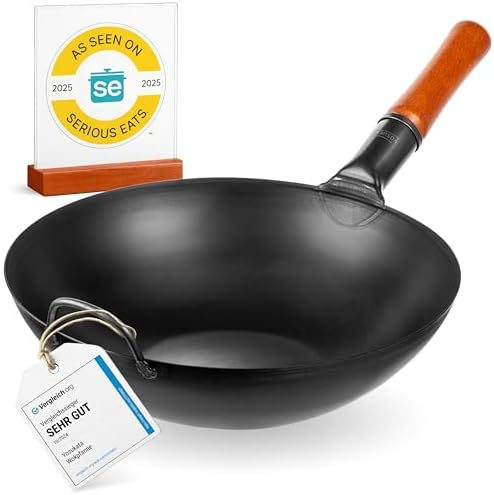
The YOSUKATA is a 13.5-inch flat-bottom carbon steel wok. It works on gas, electric, induction, and open fire. It suits Asian cooking such as fried rice and stir fry.
Key Features of the YOSUKATA Wok
Pre-Seasoned The listing says the wok is pre-seasoned. That gives a basic nonstick layer from day one. Carbon steel improves as you cook with it and add more seasoning over time.
Carbon Steel Build Carbon steel gets very hot, very fast. That is exactly what you want for stir fry. The downside? It rusts if you leave it wet. You have to dry it right after washing. No soap, no soaking.
Wooden Handle A wooden handle stays cooler than metal during cooking. Check that it stays tight with regular use.
Works Almost Anywhere You can use this wok on a gas stove, electric coil, induction top, glass cooktop, BBQ grill, or campfire. That kind of range is hard to beat. This helps if you cook outdoors.
Strengths and Things to Know: YOSUKATA Wok
Strengths: Carbon steel heats fast, which suits stir fry. It works on gas, electric, induction and open fire, per the listing. It has no synthetic coating.
Things to know: The seasoning can be thin at first. The wok rusts if it stays wet, so dry it right after washing and add a thin coat of oil. Check the handle now and then.
Who Should NOT Buy the YOSUKATA Wok
If you hate extra maintenance, skip this one. Carbon steel needs oil after every use and hand washing only. If you want to toss your pan in the dishwasher and forget it, look elsewhere. It is also not great if you mostly cook eggs, pancakes, or delicate fish. A flat skillet handles those much better.
Pros and Cons
Pros:
- Gets very hot for real stir fry flavor
- Works on almost every heat source, including campfire
- No chemical coatings — 100% natural surface
Cons:
- Rusts if not dried and oiled right away
- Requires regular seasoning maintenance
- Handle can loosen over time
Tramontina Professional 12-Inch Non Stick Frying Pan — Full Review
Overview
The Tramontina is a 12-inch aluminum frying pan with a reinforced nonstick coating. The listing calls it dishwasher and oven safe. It works on gas, electric and ceramic glass cooktops. Induction is not listed, so check first if you have an induction stove.
Key Features of the Tramontina Frying Pan
Reinforced Nonstick Coating Food slides right off this pan. Eggs, fish and sauces release with little oil. The coating is heavier than cheap nonstick pans, which helps it last longer.
Heavy-Gauge Aluminum The pan heats up fast and evenly. No hot spots. The heavy gauge also means the pan does not warp easily over time.
Silicone Handle Sleeve The handle has a stainless-steel core with a removable silicone sleeve. The sleeve keeps your hand cool. If you want to put the pan in the oven, pull off the sleeve first.
Strengths and Things to Know: Tramontina Frying Pan
Strengths: The nonstick coating makes cooking and cleanup simple. The heavy-gauge aluminum body heats evenly. The listing calls it dishwasher and oven safe.
Things to know: Nonstick coatings wear down over time, so avoid metal utensils and very high heat. The silicone sleeve must come off before oven use. Induction is not listed, so check first if you have an induction stove.
Who Should NOT Buy the Tramontina Frying Pan
If you cook on an induction stove, check the listing first. If you want to sear food at very high heat or cook real stir fry with a wok technique, the aluminum pan cannot handle those temps as well as carbon steel. And if you want a pan that builds a natural cooking surface over time, nonstick is the wrong direction.
Pros and Cons
Pros:
- Outstanding nonstick coating out of the box
- Even heat distribution — no hot spots
- Dishwasher safe and easy to clean
Cons:
- Induction is not listed, so check first
- Nonstick coating can wear down with heavy daily use
- Not ideal for very high-heat cooking
- Silicone sleeve can discolor over time
Wok vs Frying Pan: YOSUKATA vs Tramontina — Full Comparison
The wok vs frying pan question really comes down to how you cook. Here is a side-by-side look:
Heat
The wok wins here. Carbon steel gets hotter than aluminum. For real stir fry — the kind where food chars a little and smells smoky — you need that heat. The Tramontina cannot get there. It is a good everyday pan, but it is not a stir fry pan in the true sense.
Maintenance
The Tramontina wins here. Wash it, dry it, put it away. Done. The YOSUKATA needs oil, hand washing, and proper drying every time. Skip a step and it rusts. This is not a dealbreaker, but it is real work.
Cooking Range
The wok covers more ground. It can go on a campfire, a grill, an induction burner. The Tramontina listing does not mention induction. But the Tramontina can go in the oven, which the wok cannot.
Flavor
The wok gives food — that smoky “wok hei” taste. The Tramontina delivers clean, even results. Both are good, just different.
When comparing a stir fry pan vs wok, the carbon steel wok wins for authentic Asian cooking. But for western-style meals, eggs, and sauces, the nonstick frying pan is more practical.
Final Verdict
The wok vs frying pan question does not have one right answer. It depends on what you make.
Buy the YOSUKATA Carbon Steel Wok if you love stir fry, Asian cooking, or outdoor cooking. It takes effort to maintain, but the flavor payoff is real. It is also a great pick for anyone who wants a pan free of chemical coatings.
Buy the Tramontina Frying Pan if you want a reliable, easy-to-use pan for everyday meals. It works well for eggs, fish, sauces and general cooking, and cleanup is easy. It is the safer pick for most home cooks.
If you had to pick just one — and you do not do much Asian cooking — go with the Tramontina. But if stir fry is a regular part of your kitchen, the wok will serve you better long-term.
My Pick: Tramontina Frying Pan — best for everyday home cooking with zero learning curve.
Common Questions
Is a wok vs frying pan even a fair comparison?
Not really — they are built for different jobs. A wok is for high-heat, fast cooking with a tossing motion. A frying pan is for lower and steadier heat. Both are useful. Knowing which style you cook more often makes the choice easy.
Can I use the YOSUKATA wok for everyday cooking?
Yes, but it takes getting used to. You have to season it, dry it after washing, and re-oil it. Once it is well-seasoned, it works great for all kinds of cooking. But it is not as grab-and-go as a nonstick pan.
Does the Tramontina work on induction stoves?
The Tramontina listing does not say induction ready, so check before you buy. The YOSUKATA listing says it is compatible with induction.
What is the difference between a stir fry pan vs wok in real cooking?
A wok has high, sloped sides that let you toss food easily. A stir fry pan is flatter and better for smaller kitchens. The wok gives you more surface area for high-heat cooking. For real restaurant-style stir fry, the wok wins. For lighter stir fry at home, a flat frying pan can work fine.
How long does the Tramontina nonstick coating last?
It depends on use and care. Avoid metal utensils and very high heat, and clean it gently. Nonstick coatings wear down over time. For a related pan comparison, read our cast iron skillet vs frying pan guide.