Quick Summary
Not sure which machine fits your kitchen? The Avid Armor USV20 is built for serious home cooks who deal with soups, sauces, and wet foods. The FoodSaver is a no-fuss pick for everyday food storage on a budget. Both get the job done — just in different ways for different people.
- Best for most people: FoodSaver Compact Vacuum Sealer
- Best for wet foods and sous vide: Avid Armor USV20
- Best budget choice: FoodSaver Compact Vacuum Sealer
How We Looked at These
We did not buy or test these machines ourselves. This review is based on verified Amazon customer ratings, repeated buyer praise and complaints, and official product specs. Over 1,100 reviews for the Avid Armor USV20 and nearly 16,000 reviews for the FoodSaver give us a solid picture of how each machine performs in real kitchens.
We looked at what buyers loved, what they hated, and what showed up over and over. That way you get an honest picture — not just what the box says.
Avid Armor USV20 — Full Review
Overview of the Avid Armor USV20
★★★★★ 4.7 / 5
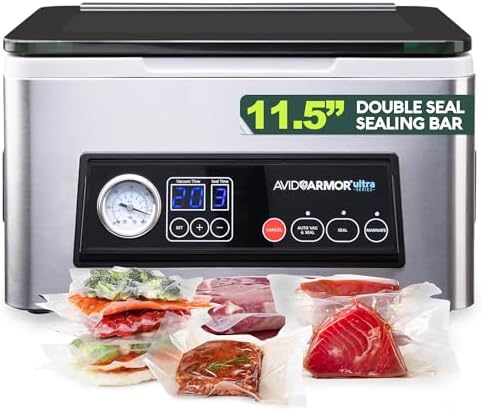
The Avid Armor USV20 is a chamber vacuum sealer built for people who want to seal wet foods without a mess. It uses a chamber design — not an external suction method — which means it can handle soups, sauces, and marinades without sucking liquid into the machine. It sits in the mid-to-high price range for home units and has a strong 4.7-star rating from over 1,100 verified buyers. Many reviewers say it feels like a machine made for real cooking — not just snacks and dry goods.
Key Features of the Avid Armor USV20
Chamber design — the biggest difference
Most home vacuum sealers use external suction. They pull air out from the outside of the bag. That works fine for dry foods. But try it with soup or a marinade and liquid gets sucked right into the machine. The USV20 works differently. It places the whole bag inside a sealed chamber and removes air from the entire space at once. The bag and the liquid stay where they belong. Buyers who came from a regular vacuum sealer often say this was a game-changer for them.
Built for sous vide cooking
If you cook sous vide — where food goes into a sealed bag and sits in a water bath — you need a tight, air-free seal. The USV20 was designed with this in mind. Many buyers use it for exactly this purpose and say the seal holds up well over long cooking sessions. No air pockets, no broken seals mid-cook.
11.5-inch seal bar — strong and replaceable
The seal bar is 11.5 inches wide. It creates a clean, consistent seal every time. What buyers really appreciate is that it is repairable. Most home machines are throwaway units. This one has parts you can actually replace, backed by US-based support in Lenexa, Kansas.
Comes ready to use
The box includes 20 pre-sized vacuum pouches (11×10 inches) and an accessory hose for sealing mason jars and vacuum canisters. You do not need to buy anything extra to start using it on day one.
Simple controls
One-touch operation. Clear glass lid so you can see inside. No complicated settings to figure out. Many buyers say it is easy to learn even if you have never used a chamber sealer before.
Real Buyer Feedback on the Avid Armor USV20
Buyers are happy with this machine — 4.7 stars from over 1,100 people is genuinely strong. Here is what people say most:
What buyers love:
- Sealing liquid-rich foods without any mess
- Clean, consistent seals every single time
- The build quality feels solid and durable
- Great for sous vide meal prep
- US-based customer support that actually responds
Common complaints:
- It is heavy — 17.3 pounds. Not easy to move around.
- The pouches it comes with are a specific size. You need to buy Avid Armor compatible bags, which cost more than generic vacuum bags.
- It costs more upfront than a standard FoodSaver-style machine.
- The footprint is compact, but at 12.25″ x 8.5″ x 3″, it still takes up counter space.
One complaint that pops up more than once: buyers who expected it to work with regular FoodSaver bags were disappointed. It needs chamber-specific bags. If you buy those bags in bulk from Avid Armor, the cost evens out — but it is worth knowing ahead of time.
Who Should NOT Buy the Avid Armor USV20
If you just want to store leftovers and freeze meat for later, this machine is more than you need. It is also not the right pick if you are on a tight budget — the upfront cost plus chamber-specific bags adds up. And if you move your sealer in and out of a cabinet often, the weight will get old fast.
Pros and Cons
Pros:
- Handles wet foods, soups, and marinades without issue
- Extremely consistent, clean seals
- Replaceable parts and real US-based support
- Ideal for sous vide cooking
- Strong rating — 4.7 stars from real buyers
Cons:
- Heavier and pricier than most home sealers
- Requires chamber-specific bags, not generic ones
- Takes up permanent counter space
FoodSaver Compact Vacuum Sealer — Full Review
Overview of the FoodSaver Compact Vacuum Sealer
★★★★☆ 4.2 / 5
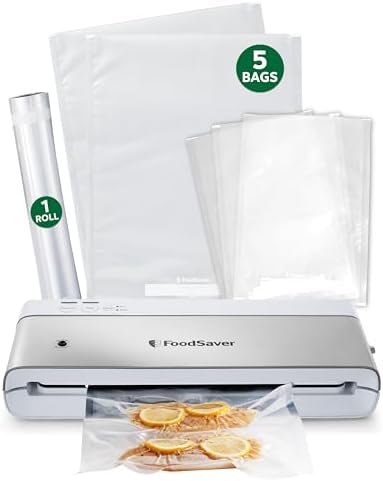
The FoodSaver Compact is a standard external vacuum sealer for everyday home use. It is light, affordable, and stores vertically to save counter space. With nearly 16,000 Amazon reviews and a 4.2-star rating, it is one of the most-bought vacuum sealers in the US. It comes with bags and a roll so you can start sealing right away. This is the machine most American households picture when they think about vacuum sealing.
Key Features of the FoodSaver Compact
Vertical storage design
Most vacuum sealers lay flat and take up a lot of counter space. This one stands upright. Buyers who live in small apartments or have limited counter space love this. It tucks into a cabinet corner without a fuss.
Dry and Moist food settings
The FoodSaver has two seal modes — one for dry foods like crackers and nuts, one for moist foods like meat and cheese. The moist setting gives a longer heat seal to keep moisture in. Many buyers say this makes a real difference for meats they plan to freeze long-term.
Keeps food fresh up to 5x longer
FoodSaver says their bags keep freezer food fresh up to 5x longer than regular bags. Many buyers back this up — reviewers who freeze bulk chicken, pork, and fish say the food comes out with no freezer burn months later.
Works with the full FoodSaver lineup
It connects to FoodSaver handheld sealers and works with all FoodSaver bags, rolls, and accessories. If you already have FoodSaver gear, this machine fits right in.
Includes starter kit
The box comes with one 11″ x 8′ roll, three quart-sized bags, and two gallon-sized bags. Not a huge amount, but enough to get started before you order more.
Real Buyer Feedback on the FoodSaver Compact
This is the most reviewed vacuum sealer on Amazon in its category. Nearly 16,000 ratings tells you a lot about real-world performance. Here is the honest breakdown:
What buyers love:
- Easy to use right out of the box
- Saves a lot of freezer space
- Works great for dry and semi-moist foods
- Affordable upfront cost
- Vertical storage design is genuinely useful
Common complaints:
- Struggles with very wet or liquid-heavy foods — liquid gets sucked toward the machine
- Some buyers report the seal weakens after heavy use
- A small number of units have had issues with the lid latch over time
- Does not work as well for soups or marinades compared to a chamber vacuum sealer vs regular FoodSaver use cases
The biggest repeated complaint: liquid foods are a problem. Reviewers who tried to seal soups or marinated meats without pre-freezing them first often ended up with failed seals or liquid inside the machine. This is not a flaw unique to FoodSaver — it is a limit of how external suction sealers work. But it surprises a lot of buyers who expected it to handle everything.
Who Should NOT Buy the FoodSaver Compact
If you regularly cook sous vide or need to seal liquid-heavy foods like soups, broths, or sauces, this machine will frustrate you. It is also not a great long-term pick if you seal food in very high volumes — the motor is not built for that kind of load. And if you want a machine that feels like it will last a decade of heavy use, this is not that machine.
Pros and Cons
Pros:
- Affordable and widely available
- Vertical storage saves counter space
- Great for dry and moist (but not liquid) foods
- Strong buyer base and reliable brand support
- Works with all FoodSaver accessories
Cons:
- Cannot handle liquid-rich foods without pre-freezing
- Build quality is plastic — feels less durable than steel machines
- Some units show wear after heavy use
Chamber Sealer vs Vacuum Sealer: Avid Armor USV20 vs FoodSaver — Full Comparison
Feature | Avid Armor USV20 | FoodSaver Compact |
Build Quality | Stainless steel, heavy-duty | Plastic and silicone |
Performance with Wet Foods | Excellent — handles liquids easily | Poor — liquids cause seal failures |
Sous Vide Ready | Yes — built for it | Limited |
Ease of Use | Easy one-touch controls | Very easy, beginner-friendly |
Durability | Repairable parts, long-lasting | Good for light to medium use |
Size / Portability | 17.3 lbs, stays on counter | Lightweight, stores vertically |
Bag Compatibility | Avid Armor chamber bags only | All FoodSaver bags and rolls |
Star Rating | 4.7 / 5 (1,152 reviews) | 4.2 / 5 (15,792 reviews) |
Best For | Wet foods, sous vide, serious cooks | Everyday food storage, dry/moist foods |
Value for Money | High — if you need what it does | High — for casual everyday use |
How They Compare in Real Use
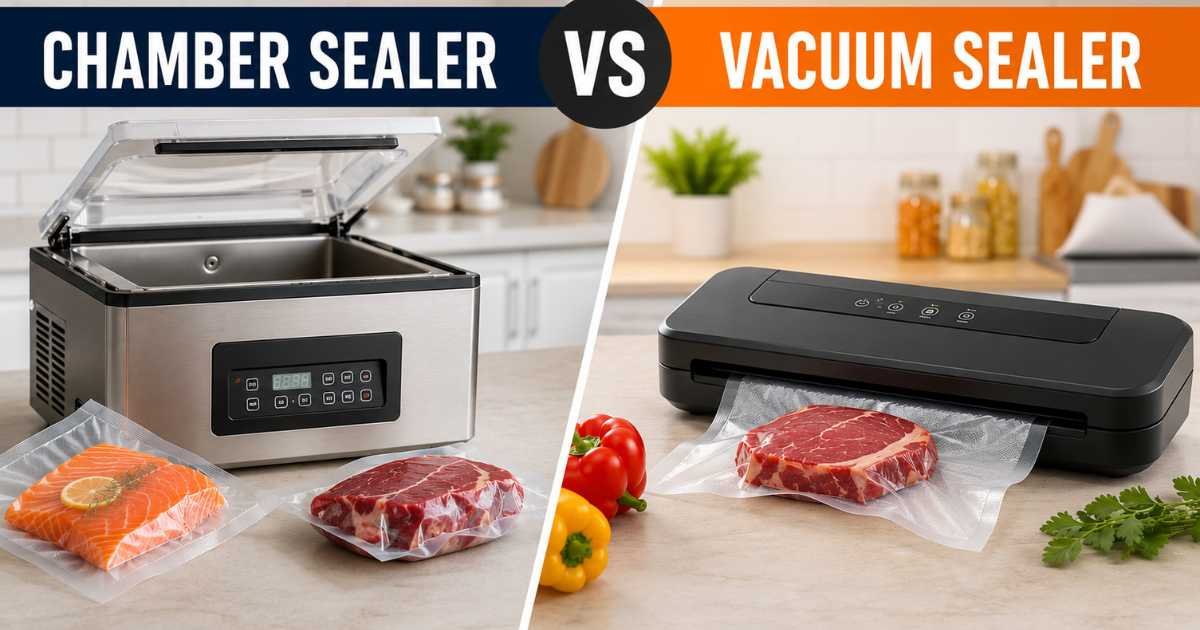
When you look at the chamber sealer vs vacuum sealer question side by side, it really comes down to what you are sealing.
The Avid Armor USV20 wins on performance with anything wet. Soups, sauces, marinated chicken, broth — all of it seals cleanly. The chamber design removes air from around the bag, not through it, so liquid never gets near the machine. Reviewers who switched from a FoodSaver to the USV20 often say they wish they had made the switch sooner.
The FoodSaver wins on convenience and price. It is lighter, cheaper, easier to store, and works great for the average American household — bulk chicken breasts, cheese, dry goods, leftovers. For most people, it does exactly what they need.
The chamber vacuum sealer vs FoodSaver question is really about whether you do wet-food cooking. If you do not, the FoodSaver is the smarter buy. If you do, the FoodSaver will disappoint you.
One more thing worth noting: the chamber vacuum sealer vs vacuum sealer gap in bag costs is real. Chamber bags cost more per unit. Over time, if you seal food daily, that adds up. FoodSaver bags are cheaper and available everywhere.
Other Options to Consider
Nesco VS-12 Deluxe Vacuum Sealer A solid mid-range external sealer with a stronger motor than the FoodSaver. Good for people who want more durability without jumping to a chamber machine.
Weston Pro 2300 Commercial Vacuum Sealer A step up from the FoodSaver for people who freeze large amounts of meat. More powerful suction and better seals on thicker bags. Still an external sealer, so wet foods remain a challenge.
VacMaster VP215 Chamber Vacuum Sealer A commercial-grade chamber sealer for serious home processors and small restaurants. Much bigger and more expensive than the USV20, but handles bulk volume like nothing else. Worth considering if you process game meat or run a small food operation.
Final Verdict
Here is the honest bottom line.
If you are a home cook who handles wet foods, does sous vide, or seals soups and sauces regularly — buy the Avid Armor USV20. It costs more. It is heavier. But it does things the FoodSaver simply cannot. The chamber vacuum sealer vs regular vacuum sealer difference is night and day once you try it on liquid-rich foods. Buyers consistently back this up.
If you want to save money on groceries, stop freezer burn on meat, and store leftovers longer — the FoodSaver Compact is all you need. It is simple, affordable, and trusted by hundreds of thousands of US buyers. When comparing chamber vacuum vs vacuum sealer options for everyday household use, the FoodSaver delivers more value for less money.
When thinking about the chamber sealer vs vacuum sealer question overall, the right answer depends on your kitchen. Neither machine is a bad choice — they are just built for different cooks.
My Pick for Most Households: FoodSaver Compact — best for everyday food storage on a budget.
My Pick for Serious Cooks: Avid Armor USV20 — best for wet foods, sous vide, and long-term durability.
Common Questions
Is a chamber sealer vs vacuum sealer actually worth the price difference in 2026?
If you seal wet foods, yes — without question. A chamber sealer handles liquids in a way a standard external sealer never can. If you only seal dry goods or basic meats, the price difference is not worth it. The FoodSaver does the job for much less.
Can the FoodSaver handle soups and sauces?
Not well. Many buyers try it and end up with liquid inside the machine or a failed seal. The workaround is to freeze the liquid first, then seal. But that adds steps. If wet foods are your main use, go with the Avid Armor.
What is the difference in a chamber vacuum sealer vs regular external sealer?
A regular sealer sucks air out through the bag opening. A chamber sealer places the whole bag inside a sealed chamber and removes air from the entire space at once. The chamber method is more powerful, more consistent, and works with liquids. The regular method is cheaper and easier to store.
Do I need special bags for the Avid Armor USV20?
Yes. It requires chamber-specific vacuum bags, not the standard FoodSaver rolls. Avid Armor sells bags in bulk, which helps with cost. But if you want to use generic bags you find at Walmart, this machine will not work with them.
When looking at a chamber vacuum sealer vs FoodSaver for sous vide, which wins?
The chamber sealer wins every time. Sous vide needs a tight, complete air-free seal. The Avid Armor USV20 was designed with sous vide in mind. The FoodSaver can work for simple sous vide bags, but more experienced cooks report inconsistent results with thicker cuts and longer cook times.