
Quick answer: If you ask what milk is best for espresso machine drinks, the answer for most people is cold whole dairy milk. It has about 3.25% fat and enough protein to make smooth, glossy microfoam for lattes and cappuccinos.
If you skip dairy, pick a barista edition oat milk. It steams the closest to whole milk. Barista soy and almond milk also work with a little care.
Steam to 140 to 155°F (60 to 68°C). Hotter milk tastes flat and burnt. Below you will find a milk chart, steaming steps, plant milk tips, pros and cons, what you can and cannot do, and a full FAQ.
What milk is best for espresso machine drinks? It is the first question many new home baristas ask. You bought the machine. You pulled a nice shot. Then the milk came out thin, bubbly or flat. In most cases the milk was the problem, or the way it was steamed.
This guide explains which milk foams best, why it works, and how to steam it at home. It covers dairy milk, lactose-free milk and the main plant milks. Every tip is short and easy to follow.
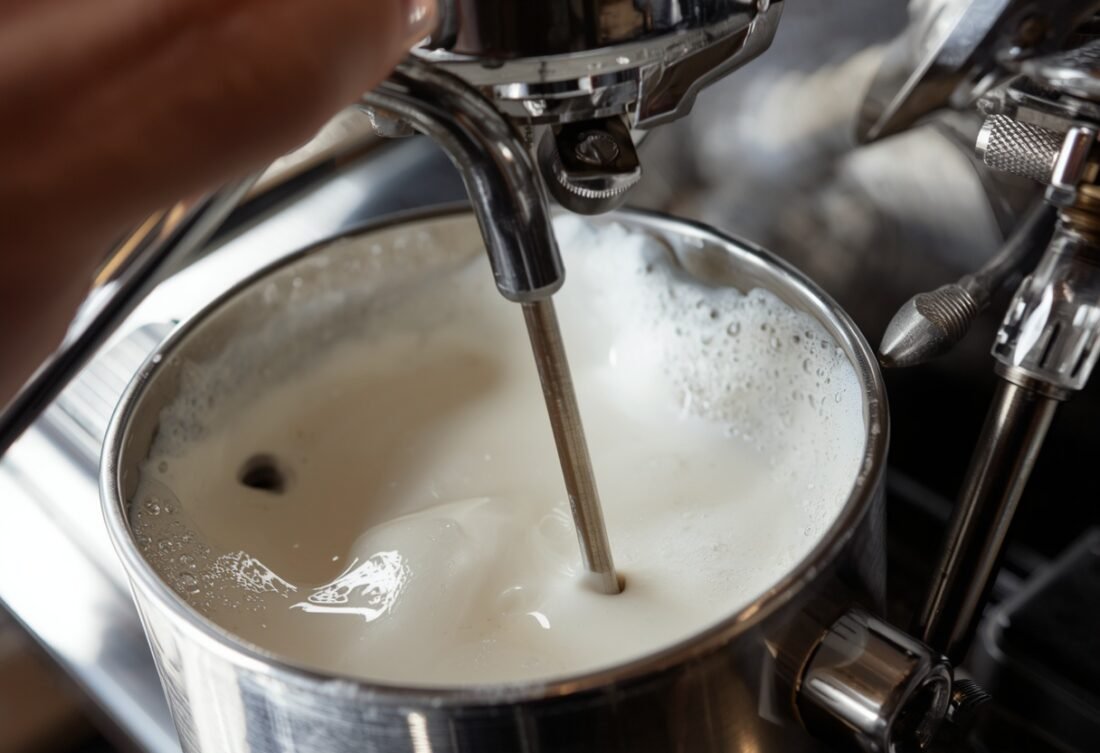
What Milk Is Best for Espresso Machine Steaming and Why
Two parts of milk decide how it steams: protein and fat. Protein builds the foam and holds the tiny bubbles in place. Fat gives the drink body, a creamy feel and a sweet taste. You need both in a good balance.
- Protein traps air and keeps the foam stable.
- Fat makes the foam silky and carries flavor.
- Sugar (lactose in dairy) turns sweeter as the milk warms.
- Temperature matters as much as the milk itself. Too hot ruins it.
Whole milk has the best mix of the two, so baristas call it the standard. Clive Coffee calls organic whole milk the gold standard for latte art. Seattle Coffee Gear says whole milk is the easiest to work with and gives the most stable microfoam.
Milk Comparison Chart for Espresso Machines
Here is how the common milks compare when you steam them with an espresso machine steam wand.
| Milk | Foam quality | Taste in coffee | Best for |
|---|---|---|---|
| Whole milk (about 3.25% fat) | Excellent. Glossy, silky, stable | Creamy and sweet | Lattes, cappuccinos, flat whites, latte art |
| 2% (reduced fat) milk | Good. A bit lighter | Lighter, less rich | Lighter lattes |
| Skim (fat-free) milk | Big, dry foam that fades fast | Thin and watery | Stiff, airy cappuccino foam only |
| Lactose-free milk | Good | Slightly sweeter | People who avoid lactose |
| Half-and-half or cream | Poor. Too much fat | Very rich | Drip coffee, not steaming |
| Barista oat milk | Very good. Close to whole milk | Mild, slightly sweet | Dairy-free lattes and latte art |
| Barista soy milk | Good, but can curdle | Creamy, a little beany | Dairy-free cappuccinos |
| Barista almond milk | Fair. Thinner foam | Nutty, light | Light lattes with gentle steaming |
| Coconut milk | Weak. Foam breaks down | Strong coconut flavor | Iced drinks |
Best Dairy Milk for Espresso Machine Drinks
Whole Milk: The Top Choice
Whole milk is the best milk for latte drinks and the best milk for frothing in most homes. It makes fine, wet, shiny foam that mixes into the espresso. It also pours well, so it is the easiest milk for learning latte art. Every café standard is built around it.
2% Milk: A Lighter Option
Reduced fat milk still steams well. The foam is a little less creamy and less durable in the pitcher. It is a fine pick if you want a lighter drink and still want smooth texture.
Skim Milk: Lots of Foam, Little Body
Skim milk makes a big pile of foam. The trouble is the foam is dry and stiff, and it collapses quickly. It also tastes thin. Use it only if you like a very airy, dry cappuccino top.
Lactose-Free Milk
Lactose-free whole milk is still cow’s milk, so it has the same protein. It steams well. It tastes a little sweeter because the lactose is already broken down. Sage (Breville) lists it as a good dairy choice for frothing.
Half-and-Half and Cream
These have too much fat and not enough protein for their weight. They get hot and rich but do not form real microfoam. Keep them for drip coffee.
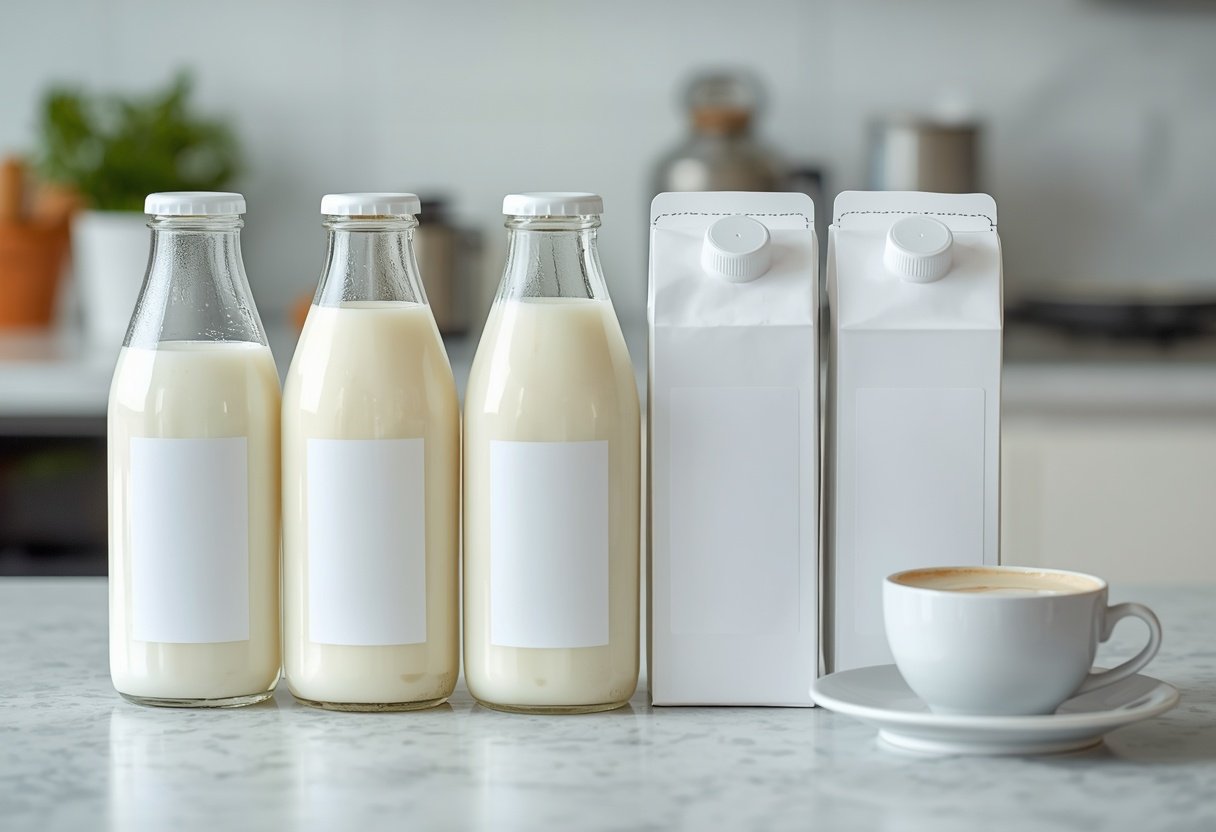
Best Non-Dairy Milk for Steaming in an Espresso Machine
The most important rule for plant milk is simple. Buy the barista version. Barista editions add oils and other helpers so the milk holds up under steam. La Marzocco Home warns that regular grocery plant milk without the barista label is very hard to steam well.
Oat Milk for Espresso Machine Drinks
Barista oat milk is the best non-dairy milk for steaming. It is thick and creamy, and it steams much like whole milk. Clive Coffee found that Oatly Barista Edition steams almost the same as dairy and makes good foam for latte art. It also curdles less often than soy or almond.
Soy Milk
Soy milk has high protein, so it can make firm, creamy foam. The risk is curdling, especially in very hot or acidic coffee. Steam it gently and avoid overheating.
Almond Milk
Almond milk is thinner and lower in protein. The foam is lighter and fades faster. Breville suggests stretching it a bit longer and keeping it cooler, around 131°F, for the smoothest texture. Use a barista blend such as Califia Farms Barista or Pacific Barista Series.
Coconut, Cashew and Rice Milk
These are harder to steam. Coconut milk is high in fat and sugar but low in protein, so the foam breaks down. Cashew, hemp and rice milk give thin, weak foam. They taste fine in iced coffee or a splash in an americano.
| Plant milk (barista version) | Steaming difficulty | Best target temperature | Main tip |
|---|---|---|---|
| Oat | Easy | Same as dairy, 140 to 155°F | Steam it like whole milk |
| Soy | Medium | Low end of the range, near 140°F | Do not overheat, or it may curdle |
| Almond | Medium to hard | Cooler, about 131°F | Add air a little longer, keep it cooler |
| Pea protein | Medium | Low end of the range, near 140°F | Protein is close to dairy, so it can foam well |
| Coconut | Hard | Low end of the range | Better for iced drinks |
Always shake the carton first. Plant milks settle in the box. Pick one plant milk and practice with it, because each one behaves a little differently.
How to Steam Milk With an Espresso Machine: Easy Steps
Even the best milk turns out badly with poor technique. Follow these steps on any espresso machine with a steam wand.
- Use cold milk straight from the fridge and a cold steel pitcher. Cold milk gives you more time to build foam.
- Fill the pitcher to just below the bottom of the spout. For one latte, 6 to 8 oz of milk in a 12 oz pitcher works well.
- Purge the steam wand for 1 to 2 seconds to clear water.
- Put the wand tip just under the milk surface. Turn the steam on fully.
- Add air. You will hear a soft paper-tearing sound. Do this for 2 to 4 seconds for a latte, or 4 to 6 seconds for a cappuccino.
- Raise the pitcher so the tip sinks a little deeper. Let the milk spin in a whirlpool.
- Stop at 140 to 155°F. The pitcher feels almost too hot to hold at this point.
- Wipe and purge the wand right away. Tap the pitcher on the counter and swirl the milk until it looks shiny.
- Pour at once. Steamed milk starts to separate if it sits.
KitchenAid and Whole Latte Love give the same basic routine: cold milk, a little air near the surface, a whirlpool, then stop before the milk gets too hot.
Milk Temperature Guide
| Temperature | What happens | Result |
|---|---|---|
| Below 100°F (38°C) | Best time to add air | Builds foam |
| About 131°F (55°C) | Milk is warm and sweet | Good stop point for almond milk |
| 140 to 155°F (60 to 68°C) | Sweet, smooth, hot enough | The target range |
| Over 155°F (68°C) | Proteins break down | Flat, burnt, boiled taste |
How Much Foam for Each Drink
| Drink | Foam level | Air time | Best milk |
|---|---|---|---|
| Flat white | Very thin layer | 1 to 2 seconds | Whole milk |
| Latte | About 20 to 30% foam | 2 to 4 seconds | Whole milk or barista oat |
| Cappuccino | About 50% foam | 4 to 6 seconds | Whole, 2% or barista soy |
| Macchiato | A small spoon of foam | 3 to 4 seconds | Whole milk |

Pros and Cons of Whole Milk vs Plant Milk
| ✔ Pros of whole milk | ✘ Cons of whole milk |
|---|---|
| Easiest milk to steam well. | Not for vegans or people with a dairy allergy. |
| Silky foam that is good for latte art. | More calories than skim or almond milk. |
| Natural sweet taste with espresso. | Short fridge life once opened. |
| Sold almost everywhere. | Brands vary a little in how they foam. |
| ✔ Pros of barista plant milk | ✘ Cons of barista plant milk |
|---|---|
| Dairy-free and lactose-free. | Regular (non-barista) cartons foam poorly. |
| Oat versions steam close to whole milk. | Soy and almond can curdle or split. |
| Long shelf life before opening. | Each type needs its own technique. |
| Many flavors to try. | Added oils and sugars in some blends. |
What You Can and Cannot Do With Milk in an Espresso Machine
| ✔ You can | ✘ You cannot |
|---|---|
| Steam whole, 2%, skim and lactose-free milk. | Get real microfoam from cream or half-and-half. |
| Steam barista oat, soy and almond milk. | Expect regular plant milk to foam like the barista kind. |
| Make latte art with whole milk or barista oat milk. | Reheat steamed milk and get good foam again. |
| Use a thermometer to hit 140 to 155°F. | Steam past 160°F without ruining the taste. |
| Use a 12 oz pitcher for one drink. | Steam a tiny amount well in a big 20 oz pitcher. |
Common Milk Steaming Mistakes and Fixes
| Problem | Likely cause | Fix |
|---|---|---|
| Big, soapy bubbles | Wand tip too high, too much air | Keep the tip just under the surface, add air for less time |
| No foam at all | Tip too deep from the start | Start near the top, listen for the soft hiss |
| Burnt or flat taste | Milk went over 155°F | Stop sooner, use a thermometer |
| Plant milk splits | Too hot, or regular (non-barista) milk | Buy barista milk, steam cooler |
| Milk not hot enough | Weak steam or too much milk | Steam less milk, clear the wand tip |
| Foam separates in the cup | Milk sat too long | Swirl and pour right away |
Keep Your Steam Wand and Machine Clean
- Wipe the wand with a damp cloth after every use.
- Purge it for 1 to 2 seconds after steaming to clear milk from inside.
- Soak the tip in a milk cleaner if the holes get blocked.
- Wash the pitcher after each drink. Old milk spoils the taste of new milk.
- Use good water to cut down on scale. See our guide to the best water for espresso machine use.
Great milk needs a good shot under it. Read our guide on the best ground coffee for espresso machine drinks to match your milk with the right beans.
Frequently Asked Questions
What milk is best for espresso machine drinks?
Cold whole dairy milk is best for most people. It has the right balance of fat and protein for silky microfoam. For a dairy-free choice, use barista oat milk.
What is the best milk for frothing with a steam wand?
Whole milk froths best. It makes fine, shiny foam that holds its shape and pours well. Barista oat milk is the closest plant-based match.
Is oat milk good for an espresso machine?
Yes, if you buy the barista edition. It steams almost like whole milk and works for latte art. Regular oat milk foams much less.
Is whole milk or 2% milk better for lattes?
Whole milk gives a creamier, richer latte and more stable foam. 2% milk still steams well and makes a lighter drink.
Why does skim milk make so much foam?
Skim milk has protein but almost no fat. The protein makes lots of bubbles, but without fat the foam is dry, stiff and fades fast.
What temperature should I steam milk to?
Aim for 140 to 155°F (60 to 68°C). Stop sooner for almond milk, around 131°F. Above 155°F, milk loses sweetness and tastes burnt.
Can I steam lactose-free milk?
Yes. Lactose-free cow’s milk has the same proteins as regular milk, so it steams well. It may taste slightly sweeter.
Why does my soy or almond milk curdle?
Heat and the acid in coffee can split plant proteins. Use a barista version and steam it a little cooler than dairy milk.
Can I use cream or half-and-half in a steam wand?
You can heat them, but they will not form real microfoam. They have too much fat for the amount of protein. Use them in drip coffee instead.
Can I re-steam leftover milk?
It is better not to. Re-steamed milk foams poorly and tastes flat. Pour only what you need and start fresh each time.
Quick Milk Buying Checklist
- For dairy, pick fresh, cold whole milk.
- For plant milk, look for the word “barista” on the carton.
- Choose oat first if you want dairy-free latte art.
- Check the date and keep the milk cold until you steam it.
- Stick with one milk until you master it.
Want other ways to brew? See our guides on the best French press coffee pot and the best single cup coffee pots.
Related reading on MiniKitchenPro