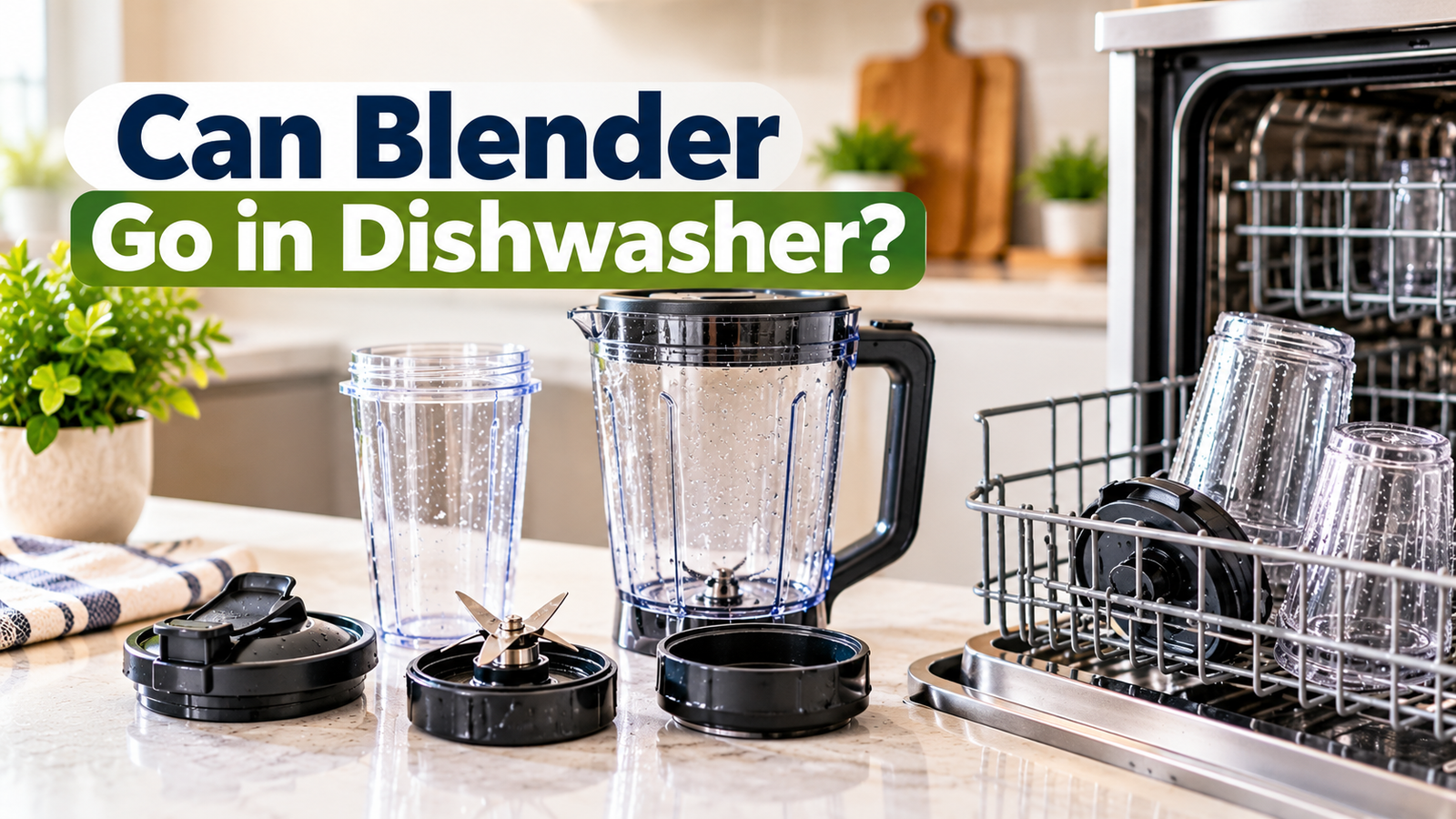
Cleaning up after a smoothie should be simple. But a blender has sharp blades, removable parts, and an electrical base, so it is worth checking before you load anything into a dishwasher. The answer to can ninja blender go in dishwasher depends on the exact model and the part you want to wash.
For many Ninja blender models, the pitcher or cup, lid, and removable blade assembly are listed as dishwasher-safe, often on the top rack. The motor base is different: never put it in the dishwasher or submerge it in water. Always follow the care instructions for your model, because portable blenders and special attachments can have extra limits.
Can Ninja Blender Go in Dishwasher? The Safe Answer
Usually, some removable parts can go in the dishwasher, but you should not treat the whole appliance as dishwasher-safe. Ninja’s product-care guidance for several blender ranges says to wash containers, lids, and blade assemblies on the top rack and to wipe the motor base with a damp cloth. See the manufacturer’s blender cleaning instructions for an example.
Before washing, identify your model number and check its manual. If a part is not listed as dishwasher-safe, hand-wash it instead. This small check can help prevent warped plastic, damaged seals, or water reaching the electrical parts.
Which Parts Can Go in the Dishwasher?
The exact list depends on the blender series. Use this table as a starting point, not as a substitute for your own manual.
| Part | Dishwasher guidance | Safety check |
|---|---|---|
| Pitcher or cup | Often safe on the rack listed in the manual. | Check rack position and heat warnings. |
| Lid | Often safe on the top rack. | Check seals and removable plugs. |
| Blade assembly | Safe only if the model manual says so. | Keep hands away from sharp blades. |
| Gaskets and seals | Rules vary by model. | Check if they need separate washing. |
| Motor base and cord | Never put them in the dishwasher. | Unplug and wipe the base with a damp cloth. |
| Special attachments | Check each part separately. | Follow its own care instructions. |
For example, Ninja’s care information for certain older blender models says containers, lids, and blade assemblies are top-rack dishwasher-safe, while a FreshVac pump is not. That is why it is important to check the individual attachment instead of assuming all accessories have the same rules. Read the relevant Ninja attachment care guidance if it applies to your product.
Why the Motor Base Must Stay Out of the Dishwasher
The motor base contains electrical components, controls, and connections. A dishwasher sprays hot water and detergent over a long cycle. Water can get into places that are difficult to dry and may damage the blender or create an electrical hazard later.
Instead, switch the blender off, unplug it, and wipe the outside with a soft, damp cloth. Do not spray cleaner directly onto the controls, soak the base, or put it under running water. Wipe away any splashes and let the surface dry fully before plugging the appliance in again.
If a spill runs under the base or reaches a charging port on a cordless model, stop using it and consult the model’s instructions. Do not assume that a water-resistant port makes the entire motor base waterproof. The official Ninja Blast MAX care FAQ, for example, specifically warns against exposing its motor base to liquid and gives its own cleaning limits.
How to Check Your Blender Model Before Cleaning
Turn the blender off and look for the model number on the underside of the motor base, the rating label, or the product packaging. Search the manufacturer’s support site for that exact number, then open the care or owner’s manual section. Do not rely only on a product photo or a general answer about another series.
Look for three specific details: which removable parts are dishwasher-safe, which rack they belong on, and whether the manual bans heated dry or sanitizing cycles. Portable blenders may have charging ports and lightweight cups that need special care. If your model’s guidance is unclear, hand-washing the removable parts is the safer choice until you confirm the instructions.
How to Prepare Removable Parts for the Dishwasher
- Turn off and unplug the blender. Never take parts off while the machine is powered.
- Separate the pieces. Remove the pitcher or cup, lid, and blade unit as the manual directs. Do not force a stuck part.
- Rinse away thick food. A quick rinse helps prevent smoothie pulp or protein powder from drying onto the parts.
- Place parts in the approved rack. If the manual specifies the top rack, do not put them on the bottom rack.
- Secure small pieces. Set lids and seals so they cannot fall against the heating element or block spray arms.
- Use the right cycle. Follow any warning about high heat, heated drying, or sanitizing settings. Some portable models prohibit heated cycles.
- Let everything dry. Make sure parts are completely dry before storage or reassembly.
Keep sharp blade assemblies away from loose dishes and avoid reaching into a dishwasher full of utensils without looking. If the manual tells you to remove the blade assembly from the container first, follow that instruction.
How to Hand-Wash Blender Parts Safely
Hand-washing is a good option when the manual calls for it or when you are unsure about a part. First, unplug the machine and detach the removable parts. Add warm water and a small amount of dish soap to the pitcher or cup. Use a soft sponge or a long-handled dish brush to clean the inside and around the rim.
Be especially careful with the blade assembly. The blades can cut you even when they are not moving. Hold the assembly by its safe base or handle, and use a brush with a handle rather than putting your fingers near the cutting edges. Do not grab the blades to remove stuck food. Rinse all soap away and allow the parts to air-dry completely.
For an ordinary pitcher, a quick rinse just after blending can prevent dried fruit from sticking. If your manual approves it, you can add warm water and a little dish soap to the container, secure the lid, and use the recommended short cleaning method. Never run the blender with loose parts or use a self-cleaning method that your model does not support.
Common Dishwasher Mistakes to Avoid
- Putting the motor base in the dishwasher: this is not a safe cleaning method for the base.
- Assuming every model is identical: portable cups, seals, pumps, and special attachments can have different care rules.
- Ignoring the rack position: follow the manual’s top-rack or other placement instruction.
- Using high heat without checking: hot drying or sanitizing may deform some plastic parts.
- Loading blades carelessly: sharp edges can injure you or scratch nearby items.
- Reassembling wet parts: trapped water may cause smells and can affect safe storage.
- Using abrasive pads: rough scrubbers can scratch plastic or damage finishes and seals.
If a part comes out cloudy, warped, cracked, or loose, stop using it until you confirm that it is safe. Replace damaged parts with compatible manufacturer-approved parts, and do not try to bend a warped lid back into shape.
Easy Cleaning Routine After Each Use
A small routine saves time. After blending, turn off and unplug the machine, then remove the container from the base. Rinse the container and lid before residue dries. Wash the parts according to the model instructions, and wipe the motor base with a damp cloth. Leave the pieces apart until fully dry, especially around seals and grooves where water can collect.
For more blender tips, see our guides on making a smoothie in a blender, learning how to use a blender, and easy blender recipes. Proper use and cleaning go hand in hand, and each guide can help you get more from your appliance.
Can Ninja Blender Go in Dishwasher FAQ
Can I put the blender pitcher on the bottom rack?
Only if the manual for your exact model allows it. Many Ninja care guides recommend the top rack for containers, lids or blades, so use that guidance when it applies.
Should I remove the blade assembly first?
Follow the manual. Some models require the blade unit to be removed from the pitcher or cup before dishwasher cleaning. Handle it by its base and keep your hands clear of the sharp edges.
Can a portable blender go through a heated dry cycle?
Not always. Some portable models warn against heated cycles because they may deform the vessel or lid. Check the care FAQ for your exact series.
Is hand-washing better than using a dishwasher?
It can be gentler and gives you more control, especially for parts with seals or unclear care rules. A dishwasher is convenient when the manufacturer confirms the removable parts are safe for it.
What if the model number is missing?
Check the original packaging, receipt or order history. Until you find the right manual, hand-wash the removable parts and wipe the motor base with a damp cloth.
What should I do if water gets into the motor base?
Stop using the blender. Do not plug it in while wet. Follow the manufacturer’s safety instructions or contact support for advice on your model.
Can the motor base go in the dishwasher?
No. Never put the motor base in the dishwasher or soak it. Unplug it and wipe it with a damp cloth.
Where do I find my Ninja blender’s model number?
Look on the underside of the motor base, the rating label or the product packaging. Then search the manufacturer’s support site for that exact number.
Final Verdict
So, can ninja blender go in dishwasher? For many models, the removable pitcher or cup, lid, and blade assembly may be dishwasher-safe, often on the top rack. The motor base must stay out of the dishwasher and should only be wiped with a damp cloth. Because care instructions can differ by series and attachment, check your exact model’s manual before cleaning. When in doubt, hand-wash the removable parts and keep the electrical base dry.