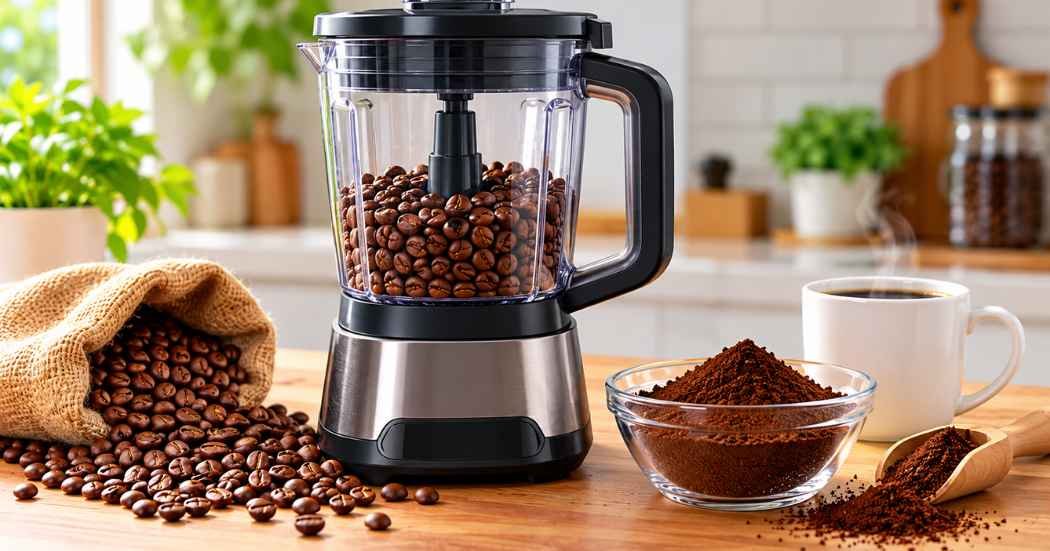
Can you grind coffee beans in a Ninja blender? Yes, in many cases you can. But it depends on your model and the blade or attachment you have.
Ninja makes a coffee and spice grinder attachment for some of its blenders. That is the safest way to do it. Other models are less clear, so you need to check your manual first.
Here is how it works, what to expect, and when a plain coffee grinder is the better pick.
Can You Grind Coffee Beans in a Ninja Blender?
It can work, but not on every Ninja.
Ninja sells a Coffee & Spice Grinder Attachment. Its product page says the cup holds 12 tablespoons and is built for hard coffee beans, tough spices, and tiny seeds. The grinder cup, blade, and lid are dishwasher safe.
There is a catch. The attachment only fits certain blender bases. Ninja says it works with the Auto-iQ series (BL490, BL640, BL680, and NN100 models) and select BL480 models. It says the grinder is not compatible with the BL685 and BL688.
What about the regular pitcher or cup? Ninja’s pages for those do not clearly say they are meant for whole beans. Ninja’s support page for the BL490 series says to use the grinder cup for dry foods like coffee and to use the regular cups for wet foods like fruit and vegetables. So if you want to know whether a Ninja blender can grind coffee beans, start with whether your model has a grinder option.
If your manual does not mention grinding dry beans, do not guess. Ask Ninja support before you try it.
How to Grind Coffee Beans in a Ninja Blender
These steps fit a model that has a grinder attachment. Always follow the manual for your exact model.
- Unplug the blender. Make sure the grinder cup and lid are clean and dry.
- Add a small amount of whole beans. Do not fill the cup to the top. A smaller batch grinds more evenly.
- Lock the blade assembly and lid on the cup, then attach it to the base the way your manual shows.
- Pulse in short bursts of one or two seconds. Do not hold the button down.
- Stop and look at the grounds after a few pulses. Ninja’s attachment has a clear lid for checking the grind.
- Pulse a little more if the pieces are still too big. Stop when the grounds look like you want.
- Unplug the blender before you take the cup off. Open the lid and pour out the grounds.
Short pulses matter. Running the motor too long can heat the beans. Heat can change the taste of your coffee. It also makes the grind less even.
Ninja’s attachment page does not mention a grind size dial. So you control the size with your pulses and your eyes.
What Grind Size Can You Get?
The best grind size for coffee depends on how you brew. Here is a simple guide.
- Coarse grounds look like sea salt. They suit a French press and cold brew.
- Medium grounds look like sand. They suit a drip coffee maker.
- Fine grounds look like table salt or a little finer. They suit espresso.
With a blender, you will get a mix of sizes. Some pieces end up big and some turn to dust. That is how blade grinding works.
For that reason, a Ninja blender fits coarse and medium brewing better. Espresso needs very even, very fine grounds, and a blade is not great at that. If you drink mostly espresso, a dedicated grinder will serve you better.
Which Ninja Blender Models or Attachments Can Grind Coffee?
Here is what can be confirmed. Ninja’s grinder attachment page lists these models as compatible:
- BL2012 and BL2013
- BL480, BL481, BL482, BL487, and BL488W
- BL490, BL491, BL492, and BL493 (including some letter versions)
- BL640 and BL641
- BL687CO
- NN100, NN100A, NN101, and NN102
Ninja also says to call its support line to check if your BL480 is a match. And it says the BL685 and BL688 are not compatible.
What about all other Ninja blenders? That could not be confirmed. Ninja makes many lines, and the manuals do not all cover coffee grinding. If your model is not on the list, check your manual or ask Ninja. You can also read a Ninja blender review for your model to see what it comes with.
Also remember that lists change when Ninja releases new products. Check the current page before you buy an attachment.
Ninja Blender vs. Coffee Grinder
Can you use a blender instead of a coffee grinder? Sometimes. Each one has strengths.
Ease of use. A blender with an attachment saves counter space if you already own the base. A coffee grinder is made for one job and is usually simple to use.
Grind consistency. Many coffee grinders use burrs that crush beans into a more even size. A blender chops them with a spinning blade, so the pieces vary more. A blade coffee grinder works in a similar way, though.
Cleanup. A Ninja grinder cup is dishwasher safe, which is handy. Some coffee grinders are harder to wash because the motor is attached to the body.
Everyday use. If you grind beans now and then, a blender setup can be enough. If you grind every morning or brew espresso, a dedicated grinder may be worth it.
Neither one is best for everyone. It depends on how you brew and how picky you are.
Common Mistakes to Avoid
- Over-blending. Long runs heat the beans and make the grounds uneven. Use short pulses.
- Using the wrong attachment. The grinder only fits certain bases. Check the compatibility list first.
- Grinding too much at once. Overfilling the cup leaves some beans whole and turns others to powder.
- Skipping the manual. Your model may have rules the general advice does not cover.
- Adding wet ingredients. Ninja says the grinder is for dry foods only.
- Grinding coffee in a dirty cup. Old spice or garlic smell can end up in your coffee. Rinse and dry the cup first.
How to Clean a Ninja Blender After Grinding Coffee
How to clean a blender after grinding coffee beans is simple, but do it soon. Oils in the beans can leave a smell if you wait.
- Unplug the blender.
- Take the grinder cup, blade assembly, and lid apart. The blades are sharp, so handle them with care.
- For a Ninja grinder attachment, Ninja says all the parts are dishwasher safe. You can also wash them by hand in warm, soapy water.
- Wipe out loose grounds with a dry paper towel first. It keeps your sink from clogging.
- If a coffee smell stays, try a paste of baking soda and water. Rub it in, then rinse well.
- Let every part dry fully before you put it back together.
Never put the motor base in water. Wipe it with a damp cloth. For other parts, such as a pitcher, read the care section of your manual.
Frequently Asked Questions
Can you grind coffee beans in a Ninja blender?
Yes, with the right model or attachment. Ninja sells a coffee and spice grinder attachment for select blenders. Check your manual before you try.
Can a Ninja blender make fine coffee grounds?
It can make smaller pieces, but they will not be very even. For espresso, a dedicated grinder usually gives better results.
Can you grind coffee beans without a coffee grinder?
Yes. People use blenders, rolling pins, and mortars and pestles. A blender is faster, but the grounds are less even.
How much coffee should you grind at once?
Start small. Ninja’s grinder cup holds up to 12 tablespoons, but a smaller batch grinds more evenly. Grind only what you need for one brew so the coffee stays fresh.
Can every Ninja blender model grind coffee beans?
No. Ninja lists the models that work with its grinder attachment, and some models are not compatible. Check your model number.
Is a blender as consistent as a coffee grinder?
Usually not. A burr grinder gives the most even grounds. A blender is fine for coarse or medium grinds when you do not need perfect results.
Conclusion
So, can you grind coffee beans in a Ninja blender? Yes, if your model supports it. A Ninja with the grinder attachment can handle coarse and medium grounds well enough for drip coffee, a French press, or cold brew.
If you love espresso or want very even grounds, a dedicated coffee grinder is the better choice. If you already own a compatible Ninja, try the attachment first. Pulse in short bursts, grind small batches, and keep your manual close.
Not sure which Ninja to buy? Our blender buying guide can help you compare options.